





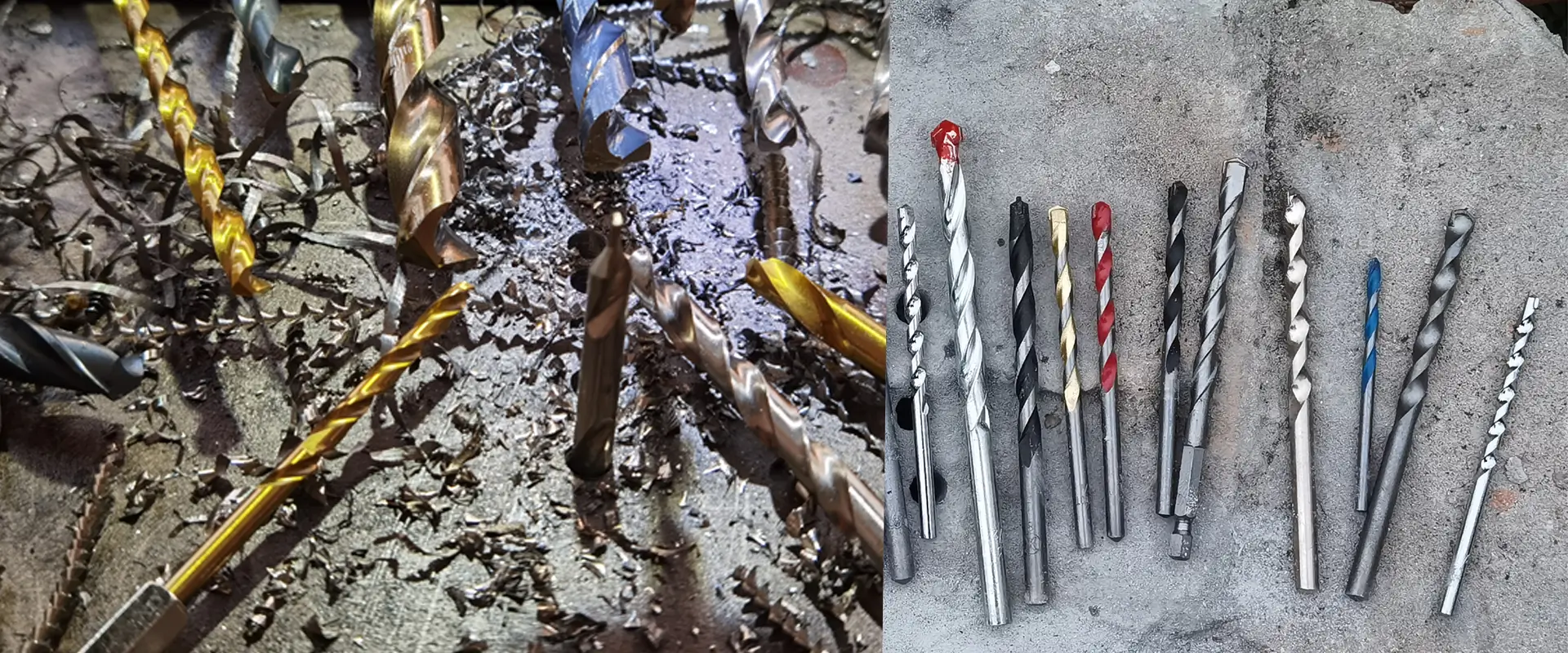

Wrong hole sizes cost you bulk orders.
For wholesalers, importers, and tool distributors, drilling problems are not small workshop issues. They can turn into product complaints, poor reviews, returned goods, and lost repeat orders. When your customers cannot drill the hole size they need, they may blame the drill bit, the tool set, or your brand.
The question “How to drill a hole bigger than your drill bit?” sounds simple, but the answer depends on the material, hole size, accuracy requirement, and available tool. A larger hole can be made in several ways, but not every method is safe, accurate, or suitable for professional users.
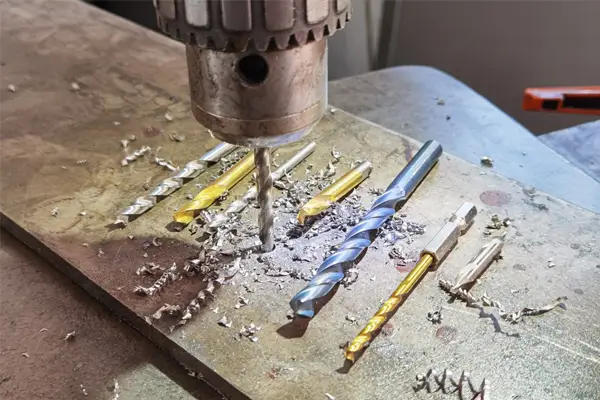
What is the Relation Between a Drill Bit Diameter and Speed?
Drill bit diameter and drilling speed are closely connected. The larger drill bit diameter, the slower drilling speed should usually be.
This is because the outside cutting edge of a larger drill bit moves faster than the edge of a smaller drill bit at the same RPM. If a large drill bit runs too fast, it creates too much heat. Heat can damage the cutting edge, burn the material, reduce accuracy, and shorten tool life.
For your customers, this often appears as:
- Blue or burned drill bits
- Fast dulling
- Rough hole edges
- Broken drill bits
- Oversized or inaccurate holes
- Heavy vibration during drilling
- Poor drilling performance in stainless steel or hard metal
For buyers, this means one important thing: a drill bit is not only judged by material or coating. It must also be used at the correct speed for its diameter and application.
Why Larger Drill Bits Need Lower RPM
A small drill bit removes less material and produces less cutting resistance. It can usually run at a higher speed. A larger drill bit removes more material with each rotation, so it needs more torque and lower speed.1
For example, a 3 mm drill bit can rotate much faster than a 16 mm drill bit. If both run at the same RPM, the 16 mm bit will generate more heat at the cutting edge. This is especially dangerous when drilling metal.
In professional use, large diameter drilling should be controlled with:
- Lower RPM
- Stable feed pressure
- Proper clamping
- Cutting oil for metal
- Pilot holes for larger sizes
- Sharp and well-ground drill bits
If your customers often drill large holes in metal, it is better to supply them with proper large-size drill bits, reduced shank drill bits, step drill bits, or hole saws instead of letting them force small drill bits to do the job.
Basic Drill Bit Speed Guide
The following table gives a simple reference for choosing drilling speed by material and bit size.
| Материал | Small Drill Bit | Medium Drill Bit | Large Drill Bit | Buyer Note |
|---|---|---|---|---|
| Soft Wood | High speed | Medium-high speed | Medium speed | Use sharp wood bits for clean holes |
| Aluminum | Medium-high speed | Medium speed | Low-medium speed | Clear chips often to avoid clogging |
| Mild Steel | Medium speed | Low-medium speed | Low speed | Cutting oil improves tool life |
| Нержавеющая сталь | Low-medium speed | Low speed | Very low speed | Use cobalt drill bits when possible |
| Plastic / PVC | Medium speed | Low-medium speed | Low speed | Too much heat may melt the edge |
| Concrete / Brick | Hammer drilling | Hammer drilling | Hammer drilling | Use masonry or SDS drill bits |
This table should not be treated as a fixed rule for every machine, but it gives a practical direction. Bigger bit, harder material, and deeper hole usually mean slower speed.
Speed Is Not the Only Factor
Correct speed is important, but it does not solve every drilling problem. The final hole quality also depends on:
- Drill bit sharpness
- Steel grade
- Heat treatment
- Point angle
- Flute design
- Machine stability
- Workpiece clamping
- Chip removal
- Смазка
- Operator pressure
For wholesalers and importers, this is why stable manufacturing quality matters. A drill bit with poor concentricity, weak hardness, or unstable grinding may fail even when the users chooses the correct RPM.
What Size Drill Bit Should I Use for a 5/8" Hole?
A 5/8" hole equals 0.625 inch, or about 15.875 mm. If you need a hole that is exactly 5/8", the direct answer is simple:
Use a 5/8" drill bit.
However, in real applications, the correct size depends on what the hole is used for. A clearance hole, bolt hole, dowel hole, tapped hole, and rough access hole may need different drill sizes.
When You Need an Exact 5/8" Hole
If your customer needs a finished 5/8" hole, a 5/8" drill bit is the right choice. But for better accuracy, they should drill a smaller pilot hole first and then enlarge it to the final size.
For professional metal drilling, the process should be:
- Mark the hole center.
- Use a center punch to stop the bit from walking.2
- Drill a small pilot hole.
- Enlarge the hole step by step.
- Finish with the 5/8" drill bit.
- Deburr the hole edge.
This method reduces vibration and improves hole accuracy. It also protects the final drill bit from too much cutting pressure.
Can You Use a 16 mm Drill Bit for a 5/8" Hole?
A 16 mm drill bit is slightly larger than 5/8". A 5/8" hole is about 15.875 mm, so 16 mm may work for a general clearance hole. But if the hole must be precise, 16 mm may be too large.
For buyers, this is an important detail. Many customers mix inch and metric sizes. If your market uses both systems, your product page should clearly show inch-to-mm conversions to reduce wrong purchases.
5/8" Hole for a Bolt
If the hole is for a 5/8" bolt, the correct drill size depends on the required fit.
| Приложение | Recommended Hole Logic |
|---|---|
| Tight fit | Close to 5/8" |
| Normal clearance | Slightly larger than 5/8" |
| Easy assembly | Larger clearance hole |
| Thread tapping | Use the correct tap drill size |
| Precision alignment | Drill undersize, then ream |
A common mistake is assuming that a 5/8" bolt always needs a 5/8" drilled hole. This is not always true. If the bolt must pass through freely, a slightly larger clearance hole may be needed. If the hole will be tapped, a different tap drill size is required.
How to Make a 5/8" Hole with a Smaller Drill Bit
If the user does not have a 5/8" drill bit, there are several ways to enlarge the hole.
| Метод | Лучшее для | Точность | Качество отделки |
|---|---|---|---|
| Step drill bit | Thin metal, plastic, panels | Средний | Хорошо |
| Hole saw | Wood, plastic, metal sheet | Средний | Средний |
| Reamer | Precision metal holes | Высокий | Превосходно |
| Rotary burr | Rough enlargement | Low-medium | Средний |
| Spade bit | Fast wood holes | Средний | Rough-medium |
| Forstner bit | Clean wood holes | Высокий | Хорошо |
For professional users, the best method is usually to use the correct size tool. If the job requires a 5/8" hole regularly, it is better to stock 5/8" drill bits, step drill bits, or suitable hole saws.
Getting to Know Your Drill Bits: A Quick Guide
Before choosing how to enlarge a hole, you need to understand different drill bit types. Each type is designed for a different material, hole size, and working condition.
A strong drilling product line should not only include many sizes. It should help your customers choose the right tool faster.
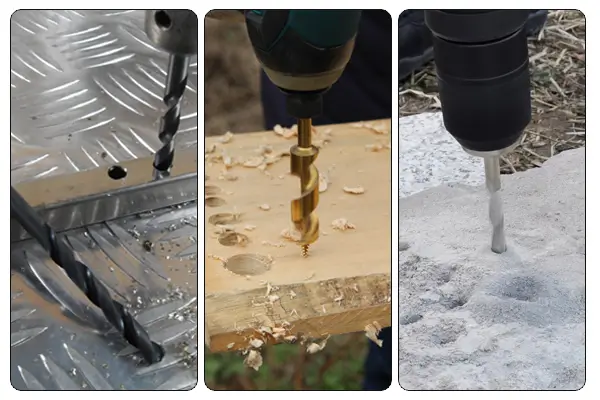
Спиральные сверла
Twist drill bits are the most common drill bits for metal, wood, plastic, and general repair work. They are usually made from HSS, cobalt steel, or carbide.
Common materials include:
- HSS 4241
- HSS 4341
- HSS 6542 / M2
- M35 cobalt
- M42 cobalt
- Solid carbide
Twist drill bits are suitable for general drilling, but large holes may require progressive drilling, reduced shank drill bits, or pilot holes3.
For wholesalers, twist drill bits are a core product because they are used by many customer groups, including workshops, hardware stores, industrial buyers, mechanics, and construction users.
Ступенчатые сверла
Step drill bits are useful when users need to enlarge holes in thin materials. One step drill bit can produce multiple hole sizes, making it popular for electricians, HVAC installers, control panel builders, and maintenance workers.
Step drill bits are suitable for:
- Sheet metal
- Aluminum panels
- Plastic sheets
- Electrical boxes
- Thin stainless steel sheets
- Control cabinets
Their main advantage is convenience. Users can enlarge a hole gradually without changing drill bits many times.
Пилы для отверстий
Hole saws are used for larger holes. Instead of removing the whole hole area as chips, they cut around the edge and remove a circular plug.
Common hole saw types include:
- Bi-metal hole saws
- TCT hole saws
- Diamond hole saws
Hole saws are useful for wood, plastic, stainless steel sheet, mild steel sheet, tile, and construction materials. They are a good solution when the required hole is much larger than standard drill bit sizes.
Лопаточные биты
Spade bits are used for fast holes in wood. They are economical and efficien, but the hole edge may not be as clean as a Forstner bit or brad point bit.
They are suitable for:
- Construction wood
- Хвойная древесина
- Rough carpentry
- Cable holes
- Fast through-hole
For distributors, spade bit sets are attractive because they are easy to sell in retail and contractor markets.
Буровые коронки для шнековых буров
Auger drill bits are designed for deep wood drilling. The screw tip pulls the bit into the wood, and the spiral flute removes chips from deep holes.
They are useful for:
- Timber framing
- Wooden beams
- Deep wood holes
- Construction work
- Electrician and carpenter use
If your customers drill thick wood or deep holes, auger bits are usually better than ordinary twist drill bits.
Сверла Форстнера
Forstner bits are designed for clean and accurate holes in wood. They are often used in furniture, cabinet making, hinge holes, and woodworking applications.
They are good for:
- Flat-bottom holes
- Clean edges
- Overlapping holes
- Furniture drilling
- Cabinet hardware installation
They are not usually the fastest choice, but they give better finish quality.
Сверла для каменной кладки
Masonry drill bits are used for concrete, brick, stone, and block. They normally have carbide tips and are used with hammer drills or rotary hammers.
Common types include:
- Straight shank masonry drill bits
- SDS Plus drill bits
- SDS Max drill bits
A metal drill bit should not be used for concrete. A masonry bit should not be used for precision metal holes. Clear product classification helps reduce misuse and customer complaints.
How Do You Choose the Right Drill Bit for the Job?
Choosing the right drill bit is not only about diameter. You need to match the material, hole size, hole depth, machine type, finish requirement, and working environment.
For B2B buyers, this is where product strategy becomes important. The better your drill bit range matches real user needs, the easier it is to win repeat orders.
Start with the Material
The material being drilled is the first factor.
| Материал | Suitable Drill Bit | Key Buying Point |
|---|---|---|
| Soft wood | Brad point, spade, auger | Fast cutting and clean entry |
| Твердая древесина | Brad point, Forstner, auger | Sharp edge and stable drilling |
| Mild steel | HSS 6542 / M2 twist drill | Balanced cost and performance |
| Stainless steel | M35 or M42 cobalt drill bit4 | Better heat resistance |
| Aluminum | Sharp HSS drill bit | Smooth chip removal |
| Plastic / PVC | Twist drill or step drill | Avoid melting and cracking |
| Brick / concrete | Masonry or SDS drill bit | Carbide tip and impact strength |
| Tile / glass | Diamond or carbide tile bit | Clean edge and low chipping |
A drill bit that performs well in wood may fail quickly in stainless steel. A masonry bit can handle concrete impact, but it cannot make clean holes in metal. This is why a professional catalog should guide customers by application.
Match the Hole Size
If the hole is small, a standard twist drill bit may be enough. If the hole is large, your customer may need another tool.
For larger holes, consider:
- Step drill bits
- Hole saws
- Annular cutters
- Лопаточные биты
- Auger bits
- Forstner bits
- Reamers
- Reduced shank drill bits
When users ask how to drill a hole bigger than their drill bit, it usually means their current tool set is incomplete. This creates a strong sales opportunity for complete drill bit sets, step drill sets, and hole saw kits.
Choose the Right Point Angle
Point angle affects centering and cutting performance.
| Угол точки | Общее использование | Преимущество |
|---|---|---|
| 118° | General drilling | Easy starting in softer materials |
| 135° split point | Metal and harder materials | Better self-centering and less walking |
For metal drilling, 135° split point drill bits are often preferred because they reduce walking on smooth surfaces. For general wood, plastic, and softer materials, 118° can still be practical.
Choose the Right Shank
The shank must match the drilling machine.
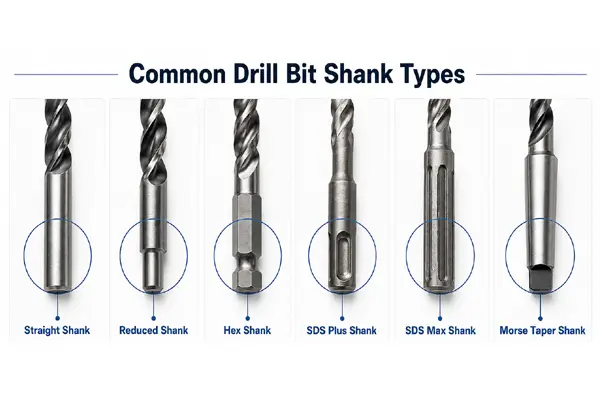
Common shank types include:
- Straight shank
- Reduced shank
- Hex shank
- SDS Plus shank
- SDS Max shank
- Morse taper shank
For retail and quick-change use, hex shank drill bits are popular. For larger diameter metal drilling, reduced shank drill bits are useful because they fit common drill chucks. For concrete drilling, SDS shanks are required for rotary hammers.
Do Not Ignore Quality Control
For importers and wholesalers, quality control is one of the most important parts of drill bit sourcing.
Key inspection points include:
- Steel grade
- Heat treatment
- Hardness range
- Point angle accuracy
- Flute grinding
- Surface finish
- Concentricity
- Cutting edge sharpness
- Batch consistency
- Packaging protection
A low-price drill bit may look profitable at first, but unstable quality can increase complaints and reduce repeat orders. For B2B buyers, stable quality is usually more valuable than the cheapest unit price.
Practical Ways to Drill a Hole Bigger than Your Drill Bit
There are several practical ways to make a larger hole when the available drill bit is too small.
1. Use a Step Drill Bit
A step drill bit is one of the easiest ways to enlarge holes in thin materials. It is especially useful for sheet metal, plastic panels, aluminum sheets, and electrical boxes.
It allows the user to increase the hole size step by step. This reduces tool changes and improves control.
2. Use a Hole Saw
A hole saw is better for larger holes. It is commonly used in wood, plastic, drywall, thin metal, and stainless steel sheet.
For large holes, a hole saw is more efficient than trying to drill the whole diameter with a twist drill bit.
3. Drill Undersize and Finish with a Reamer
This is the best method for precision metal holes. The user first drills a slightly smaller hole, then uses a reamer to bring the hole to the final accurate size.
This method gives better roundness and smoother hole walls.
4. Use a Rotary Burr or File
A rotary burr or file can enlarge an existing hole, but it is not the best choice for accurate holes. It is useful for small adjustments, repair work, or rough fitting.
5. Use a Wood Bit for Wood Applications
For wood, users should not always rely on twist drill bits. A spade bit, auger bit, or Forstner bit may create a larger hole faster and cleaner.
6. Use the Correct Larger Drill Bit
The most reliable method is still to use the correct size drill bit. If your customers often need large holes, your product range should include larger drill bits, reduced shank drill bits, Silver & Deming drill bits, step drills, and hole saws.
Common Mistakes When Enlarging a Hole
Many drilling failures happen because users try to force the wrong tool.
Using Side Pressure
A twist drill bit is designed to cut forward. It is not designed to cut sideways. Moving it side to side can create an oval hole, break the bit, or damage the drill chuck.
Running Too Fast
Large drill bits need slower speed. High speed creates heat and damages the cutting edge.
Skipping the Pilot Hole
A large drill bit may walk or grab if there is no pilot hole. A pilot hole improves accuracy and reduces drilling pressure.
Not Clamping the Workpiece
Loose material can spin, crack, or move during drilling. This is unsafe and produces poor hole quality.
Using the Wrong Drill Bit Material
HSS can work for mild steel, but stainless steel often needs cobalt. Concrete needs masonry bits. Tile needs diamond or carbide tile bits.
Заключение
Drilling a hole bigger than your drill bit is possible, but the correct method depends on the material, hole size, accuracy requirement, and tool type. For thin metal and plastic, a step drill bit is often the easiest solution. For large holes, a hole saw is more efficient. For precision metal holes, drilling undersize and finishing with a reamer gives better accuracy. For wood, spade bits, auger bits, and Forstner bits may work better than standard twist drills.
For wholesalers, importers, and procurement managers, the bigger opportunity is product planning. A complete drilling range helps your customers solve real jobsite problems, reduces misuse, and improves repeat sales. When your catalog includes twist drill bits, step drill bits, hole saws, wood bits, masonry bits, cobalt drill bits, and OEM packaging options, you are not just selling drill bits. You are offering a complete hole-making solution.
ЧАСТО ЗАДАВАЕМЫЕ ВОПРОСЫ
Can I drill a hole bigger than my drill bit?
Yes. You can use a step drill bit, hole saw, reamer, rotary burr, file, sanding drum, spade bit, auger bit, or Forstner bit depending on the material and final hole size.
What is the best way to enlarge a hole in metal?
For thin metal, use a step drill bit. For thicker metal, drill a pilot hole first and enlarge the hole gradually. For precision holes, drill undersize and finish with a reamer.
What size drill bit do I need for a 5/8" hole?
Use a 5/8" drill bit if you need a finished 5/8" hole. If the hole is for bolt clearance, you may need a slightly larger size. If the hole is for tapping threads, use the correct tap drill size.
Can I use a 16 mm drill bit for a 5/8" hole?
A 16 mm drill bit is slightly larger than 5/8". It may work for general clearance holes, but it may be too large for precision 5/8" holes.
Why does a larger drill bit need slower speed?
A larger drill bit has higher cutting edge speed at the same RPM. If it runs too fast, it creates heat, dulls quickly, and may damage the workpiece.
Should I drill a pilot hole before using a large drill bit?
Yes. A pilot hole helps the larger bit stay centered, reduces cutting pressure, and improves hole accuracy.
Is a step drill bit good for thick steel?
A step drill bit is best for thin sheet metal and panels. It is not the best option for thick steel because each step has limited cutting depth.
What drill bit is best for stainless steel?
M35 cobalt or M42 cobalt drill bits are commonly used for stainless steel because they offer better heat resistance than standard HSS drill bits.
What drill bit is best for large holes in wood?
For wood, use a spade bit for fast holes, an auger bit for deep holes, or a Forstner bit for clean and accurate holes.
How can wholesalers reduce drill bit complaints?
Wholesalers can reduce complaints by choosing stable materials, accurate grinding, proper hardness, good concentricity, clear packaging, and correct application guidance.
"Machining references describe drill power and torque requirements as increasing with drill diameter, while recommended spindle speed decreases as tool diameter increases for a given cutting speed. Evidence role: mechanism; source type: education. Supports: Larger drill bits remove more material per revolution, requiring more torque and lower rotational speed.. Scope note: The relationship depends on material, tool geometry, feed rate, and cutting conditions, so the source supports the general machining principle rather than a fixed value for every drill bit. ↩
"Machining and workshop references describe center punching as a method for creating an indentation that helps locate a drill point and reduces drill wandering at the start of a hole. Evidence role: mechanism; source type: education. Supports: Using a center punch helps prevent the drill bit from walking when starting a metal hole.. Scope note: This supports the general drilling practice, but the degree of improvement depends on material, drill geometry, machine rigidity, and operator technique. ↩
"A machining or workshop-safety reference explaining that larger drilled holes are commonly started with pilot holes or made in stages would support the drilling-method guidance. Evidence role: mechanism; source type: education. Supports: Large holes may require progressive drilling, reduced shank drill bits, or pilot holes.. Scope note: The source may support pilot-hole or step-drilling practice generally, while reduced-shank drill selection may require a separate tooling reference. ↩
"A materials or machining reference on cobalt high-speed steels can support that grades such as M35 and M42 retain hardness at elevated temperatures, which explains their common use for drilling tougher alloys such as stainless steel. Evidence role: mechanism; source type: education. Supports: Stainless steel is better drilled with M35 or M42 cobalt drill bits because they offer better heat resistance.. Scope note: This supports the heat-resistance rationale for cobalt HSS, but it does not independently prove performance for every stainless-steel grade or drill-bit brand. ↩