





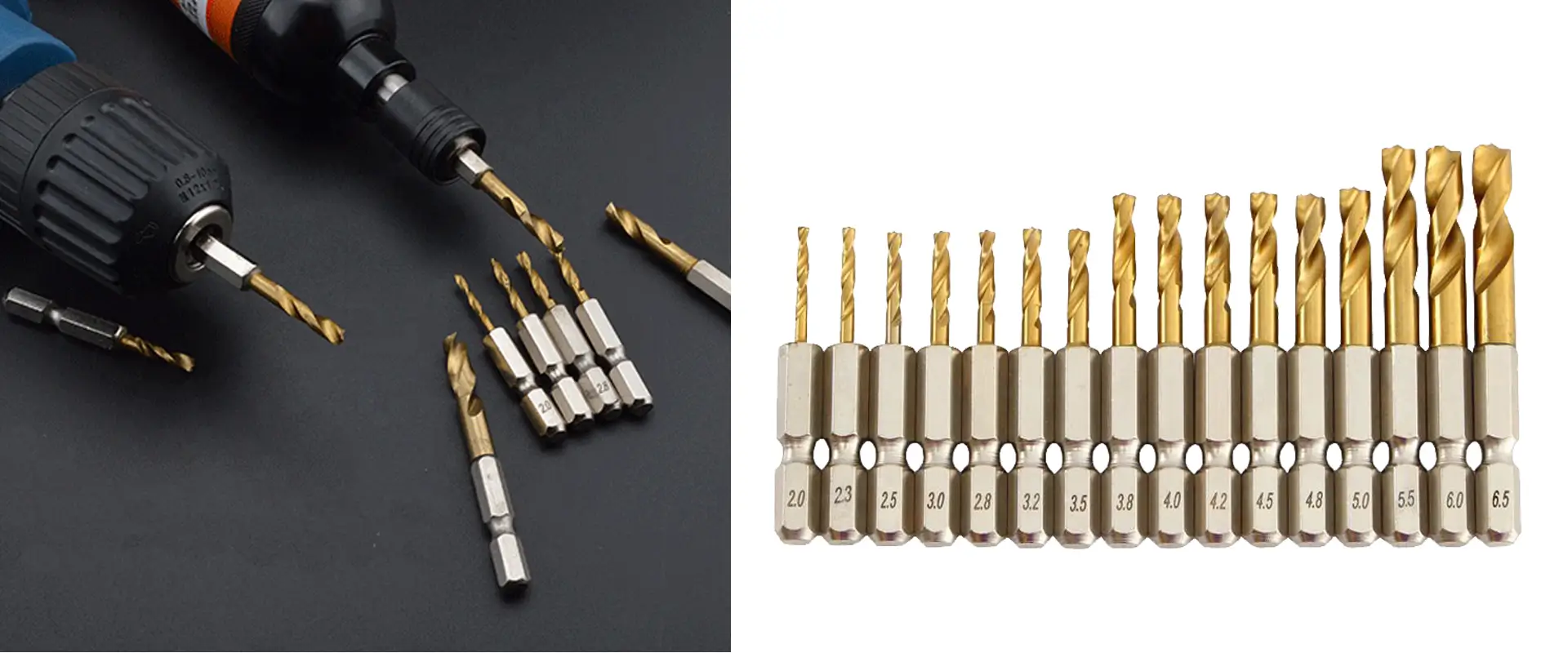

Wrong drill length can cost you repeat orders.
For importers, wholesalers, tool distributors, and procurement managers, a drill bit is not just a small cutting tool. It is part of your product reputation. If the drill bends, walks on the surface, breaks too early, or produces inaccurate holes, your customers will not complain about the factory. They will complain about your brand.
This is why the DIN 1897 drill matters.
If you source drill bits in bulk, understanding DIN 1897 is not only a technical issue. It helps you reduce wrong purchases, control quality complaints, choose the right material grade, and build a more professional product line for your market.
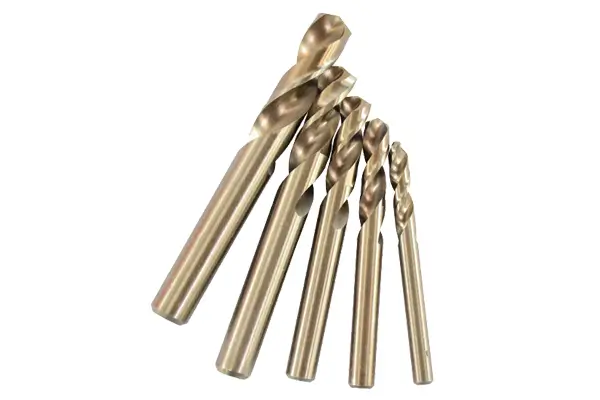
What Is a DIN 1897 Drill?
A DIN 1897 drill is a short-series twist drill made according to the DIN 1897 dimensional standard. It is mainly used for drilling shallow holes where high rigidity and reduced deflection are required.
In the market, you may see DIN 1897 drill bits described as:
- DIN 1897 stub drill bits
- Screw machine length drill bits
- Extra short HSS drill bits
- Short HSS twist drills for metal
The main feature of a DIN 1897 drill is its short overall length. Because the drill is shorter, it has better resistance against bending. This help the drill stay more stable during drilling, especially used on metal sheets, thin steel, and automated machines.
For your customers, this means cleaner holes, better control, and less drill walking. For your business, it means fewer complaint and stronger confidence in repeat orders.
Why Short Length Matters
A longer drill bit can reach deeper positions, but it is also easier to bend.1 When the drill bends, the hole may become oversized, inaccurate, or off-center. In some cases, the drill may even break.
DIN 1897 drill bits solve this problem by using a shorter and more rigid design. This is why they are often chosen for machine drilling, tapping preparation, sheet metal work, and production lines where stability is more important than drilling depth.
Why DIN 1897 Drill Bits Matter for Importers and Wholesalers
When you buy drill bits in bulk, your real concern is not only the unit price. You also need to consider product stability, customer feedback, market positioning, and after-sales risk.
A low-cost drill bit may look attractive at first. But if the geometry is unstable, the hardness is incorrect, or the drill length does not match the application, the hidden cost can be much higher.
Why B2B Buyers Like DIN 1897 Drill Bits
DIN 1897 drill bits2 are suitable for wholesalers and importers because they can be sold to many market channels:
- Industrial tool distributors
- Hardware wholesalers
- Metalworking supply stores
- Automotive repair tool suppliers
- Maintenance tool brands
- CNC and machining accessory suppliers
- Private label drill bit sets
- Professional hand tool and power tool accessory ranges
For procurement managers, this product is also easy to organize into different grades. You can offer economy, standard, professional, and premium series based on material, coating, point angle, packaging, and application.
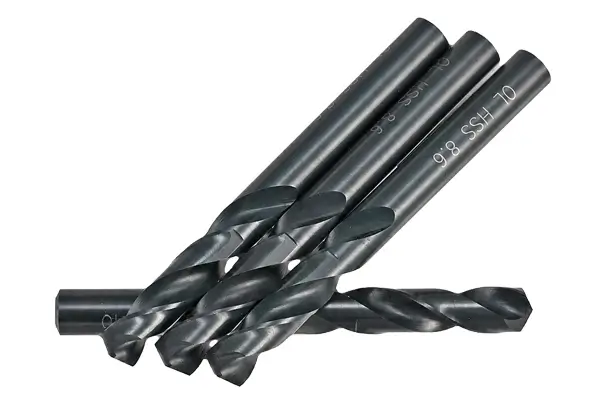
DIN 1897 vs DIN 338 vs DIN 340 vs DIN 1869
One major reason customers search for din 1897 drill is that they want to understand how it is different from other DIN drill standards.
The most common comparison is between DIN 1897, DIN 338, DIN 340, and DIN 1869.
| Standard | Common Name | Length Type | Best For | Main Limitation |
|---|---|---|---|---|
| DIN 1897 | Stub drill bit | Short length | Shallow holes, sheet metal, automatic machines, stable drilling | Not suitable for deep holes |
| DIN 338 | Standard drill bit | Standard length | General metal drilling, everyday use | Less rigid than stub drills |
| DIN 340 | Long series drill bit | Long length | Deeper holes and longer reach | Easier to deflect under pressure |
| DIN 1869 | Extra long drill bit | Extra long length | Deep-hole access and special long reach drilling | Requires careful use and lower feed pressure |
When to Choose DIN 1897
Choose DIN 1897 drill bits when your market needs short, stable, and accurate drilling3. They are a good choice for thin metal, shallow drilling, machine use, and situations where drill rigidity is important.
When to Choose DIN 338
Choose DIN 338 drill bits for general-purpose drilling. DIN 338 is one of the most common twist drill standards and is suitable for many metalworking and maintenance applications.
When to Choose DIN 340 or DIN 1869
Choose DIN 340 or DIN 1869 when your customer needs longer reach or deeper holes. However, longer drills require better control because they are more likely to bend or vibrate.
For a complete drill bit product line, many wholesalers stock DIN 1897, DIN 338, and DIN 340 together. This gives customers a clear choice based on working depth and application.
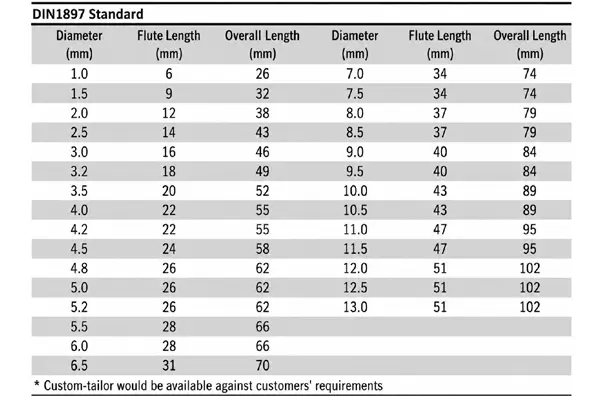
Common DIN 1897 Drill Sizes and Dimensions
DIN 1897 drill bits are available in many metric sizes. The exact size range depends on the supplier, market, and packaging style. Common wholesale sizes usually cover small to medium diameters for metal drilling.
Typical sizes include:
| Diameter | Common Use | Buyer Note |
|---|---|---|
| 1.0mm–2.5mm | Small holes, thin sheet metal, precision work | Easy to break if hardness and grinding are unstable |
| 3.0mm–4.5mm | Pilot holes, general sheet metal drilling | Popular for repair and maintenance markets |
| 5.0mm–6.5mm | Standard metal drilling and tapping preparation | Strong demand in industrial sets |
| 7.0mm–10.0mm | Workshop and machine drilling | Suitable for professional users |
| 10.5mm–13.0mm | Larger shallow holes in metal | Requires stable shank and accurate grinding |
For bulk purchasing, the most important point is not only whether the diameter is available. You should also confirm the flute length, total length, tolerance, shank diameter, point angle, and surface finish.
What Procurement Teams Should Check
Before placing a bulk order, your inquiry should include:
- Diameter range
- Required standard: DIN 1897
- Material grade
- Point angle
- Surface finish
- Packaging style
- Quantity per size
- Target application
- Target market level
This helps the factory quote correctly and avoid misunderstanding4 between economy-grade and professional-grade products.
Which Materials Are Best for DIN 1897 Drill Bits?
Material selection has a direct impact on cutting performance, price level, and market positioning. If you are selling to different customer groups, you should not use one material grade for every market.
A professional DIN 1897 drill line can be divided into different grades.
| Material Grade | Hardness Reference | Best For | Market Position |
|---|---|---|---|
| HSS 4241 | HRC 59–61 | Soft metal, plastic, light-duty use | Economy market |
| HSS 4341 | HRC 63–65 | General metal drilling | Standard wholesale grade |
| HSS 6542 / M2 | HRC 63–66 | Better wear resistance and stable drilling | Professional market |
| HSS M35 | HRC 65–67 | Stainless steel and harder metal | Premium industrial market |
| HSS M42 | HRC 65–67 | Higher heat resistance and tougher applications | High-end industrial range |
HSS 4241 for Price-Sensitive Markets
HSS 4241 can be used for markets where price is the main concern. It is suitable for light-duty applications, soft metals, plastic, and general retail demand. However, it is not the best choice for professional stainless steel drilling5.
HSS 4341 for General Wholesale
HSS 4341 is a common option for general-purpose drill bit orders. It offers better hardness than entry-level material and can be used for many standard metal drilling applications.
HSS 6542 / M2 for Professional Users
HSS 6542, also known as M2 high-speed steel in many markets, gives better wear resistance and cutting stability. It is more suitable for professional tool distributors and industrial users.
M35 and M42 for Premium Applications
M35 and M42 cobalt drill bits are designed for tougher drilling conditions. They perform better under heat and are more suitable for stainless steel, harder steel, and demanding production environments.
For importers and wholesalers, material grade is also a branding decision. If your customers are professional users, a higher-grade material can reduce complaints and support better margins.
118° or 135° Split Point: Which One Should Buyers Choose?
Point angle is another important detail when sourcing DIN 1897 drill bits. Many buyers focus on material and coating, but point geometry also affects drilling performance.
The two common choices are 118° and 135° split point.
| Point Type | Advantage | Suitable Use |
|---|---|---|
| 118° point | Easy starting, common cost-effective design | General drilling, softer materials |
| 135° split point | Less walking, better centering, stronger entry | Metal drilling, stainless steel, sheet metal |
118° Point
A 118° point is widely used for general-purpose drilling.6 It is cost-effective and suitable for many basic applications. If your market needs affordable drill bits for general retail and hardware stores, this can be a practical option.
135° Split Point
A 135° split point helps the drill start more accurately. It reduces walking on the workpiece and is more suitable for metal drilling. For DIN 1897 drill bits, this is especially useful because the short body and split point work together to improve stability.
For professional buyers, 135° split point DIN 1897 drill bits are often easier to position as higher-value products.
Surface Finish Options for DIN 1897 Drill Bits
Surface finish affects appearance, rust resistance, lubrication, wear resistance, and shelf appeal. When you build a wholesale product line, surface finish should match your target market.
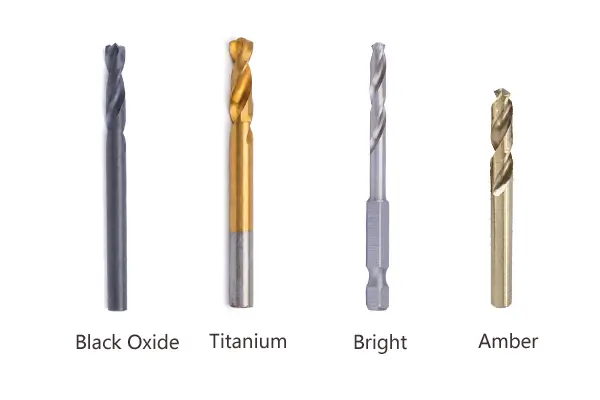
| Surface Finish | Main Benefit | Suitable Market |
|---|---|---|
| Bright finish | Clean surface, lower cost | General wholesale |
| Black oxide | Better rust resistance and smoother chip flow | Industrial and maintenance users |
| Amber finish | Better appearance and market appeal | Retail and hardware stores |
| Black and gold | Stronger shelf presentation | Branded drill bit sets |
| TiN coating | Better wear resistance and premium look | Professional and premium range |
| Cobalt finish | Higher heat resistance | Stainless steel and industrial users |
Bright Finish
Bright finish drill bits are common and cost-effective. They are suitable for general wholesale markets where price control is important.
Black Oxide
Black oxide improves surface protection and helps reduce friction. It is a popular choice for industrial drill bits and maintenance markets.
TiN Coating
TiN-coated drill bits have a gold appearance and better wear resistance. They are often used for premium packaging and branded product lines.
Black and Gold Finish
Black and gold drill bits are popular in retail markets because they look more professional on shelves7. For private label brands, this finish can help improve product value without changing the basic drill structure.
Where Are DIN 1897 Drill Bits Used?
DIN 1897 drill bits are not designed for every drilling job. Their strongest advantage is stability in shallow drilling. This makes them useful in many professional applications.
Common applications include:
- Sheet metal drilling
- Thin steel drilling
- Automatic lathe drilling
- Turret lathe use
- CNC machining
- Automotive repair
- Maintenance workshops
- Pilot hole drilling
- Tapping hole preparation
- Confined space drilling
- Production line metalworking
Sheet Metal and Thin Steel
When drilling thin metal, a long drill can walk or vibrate. A DIN 1897 stub drill gives better control and helps produce cleaner holes.
Automatic Machines and CNC Work
In machine drilling, stability is very important. The short length of DIN 1897 drill bits helps reduce deflection and improves repeatability.
Maintenance and Repair Markets
For maintenance users, DIN 1897 drill bits are useful when working in limited space or when better drill control is needed.
Tapping Hole Preparation
Accurate hole size is important before tapping. If the drilled hole is inaccurate, the thread quality may be affected. DIN 1897 drills can help improve hole control in shallow tapping preparation.
When Should You Not Use DIN 1897 Drill Bits?
A professional supplier should not claim that one drill bit can solve every problem. DIN 1897 drill bits are excellent for short and stable drilling, but they are not the best choice for deep-hole applications.
You should not recommend DIN 1897 drill bits when the user needs:
- Deep holes
- Long reach drilling
- Thick material drilling in one pass
- Drilling through deep structures
- Flexible access in hard-to-reach positions
For these applications, DIN 340 long series drills or DIN 1869 extra long drills are better options.
This point is important for B2B buyers. If your sales team understands where DIN 1897 should and should not be used, your company can reduce wrong orders and build stronger trust with professional customers.
How to Check DIN 1897 Drill Quality Before Bulk Order
Quality control is one of the most important parts of drill bit sourcing. A DIN 1897 drill may look simple, but small differences in hardness, grinding, flute shape, and point accuracy can change the user experience.
Before buying in bulk, you should check the following points.
Material Verification
The material should match your requested grade. HSS 4241, HSS 4341, HSS 6542, M35, and M42 are not the same. They have different hardness levels, heat resistance, and market positions.
Hardness Test
Hardness affects wear resistance and durability. If the hardness is too low, the drill wears quickly. If the heat treatment is unstable, the drill may break under pressure.
Point Angle Inspection
The point angle should be consistent. A poor point angle may cause walking, poor cutting, or uneven hole quality.
Flute Grinding Quality
The flute must be clean and smooth enough for chip removal. Poor flute grinding can cause heat build-up and reduce drilling efficiency.
Runout and Concentricity Check
Runout affects hole accuracy. For machine drilling and production work, concentricity very important.
Surface Finish Inspection
Surface finish should be even, clean, and free from serious defects. For branded products, appearance also affects customer confidence.
Batch Consistency
For importers and wholesalers, one good sample is not enough. You need stable quality across each batch. Batch consistency is what protects your repeat orders.
OEM and Wholesale Options for DIN 1897 Drill Bits
If you are building your own brand or supplying local distributors, OEM options are important. DIN 1897 drill bits can be customized in several ways to match different market needs.
Material Customization
You can choose different materials based on price level and application:
- HSS 4241
- HSS 4341
- HSS 6542 / M2
- HSS M35 cobalt
- HSS M42 cobalt
Point Angle Customization
Common options include:
- 118° standard point
- 135° split point
For professional metal drilling markets, 135° split point is often easier to promote.
Surface Finish Customization
Available finish options can include:
- Bright finish
- Black oxide
- Amber finish
- Black and gold finish
- TiN coating
- Cobalt series finish
Packaging Customization
Packaging is important for wholesalers, retailers, and brand owners. Common packaging styles include:
- Bulk packing
- Plastic tube
- PVC pouch
- Blister card
- Plastic box
- Metal index box
- Custom color box
- Private label packaging
Logo and Branding Options
For private label orders, branding can be added through:
- Laser marking on shank
- Custom label
- Custom blister card
- Custom color box
- Custom barcode
- Custom product instruction
Good packaging helps your product look more professional and improves shelf value in local markets.
How to Send a Clear DIN 1897 Drill Inquiry
A clear inquiry helps you get a faster and more accurate quotation. It also helps the factory recommend the right grade for your market.
When sending an inquiry for DIN 1897 drill bits, include the following information:
| Inquiry Item | Example |
|---|---|
| Product standard | DIN 1897 drill bits |
| Size range | 1.0mm–13.0mm |
| Material | HSS 4341 / M2 / M35 |
| Point angle | 118° or 135° split point |
| Surface finish | Bright, black oxide, TiN, black and gold |
| Packaging | Bulk, plastic tube, blister card, metal box |
| Quantity | Quantity per size or total quantity |
| Target market | Retail, industrial, professional, OEM brand |
| Application | Metal, stainless steel, sheet metal, maintenance |
| Logo requirement | Laser logo or private label packaging |
Example Inquiry Message
You can send a simple inquiry like this:
We are looking for DIN 1897 stub drill bits for wholesale distribution. Please quote sizes from 1.0mm to 13.0mm, HSS 4341 and M35 options, 135° split point, black oxide and TiN finish. We also need private label packaging options for our local market.
This type of inquiry is clear and professional. It allows the supplier to quote different grades and helps you compare price, quality.
Conclusion
DIN 1897 drill bits are short, rigid, and stable twist drills designed for shallow and accurate drilling. They are widely used in sheet metal, automatic machines, CNC work, maintenance, tapping preparation, and other metalworking applications where drill control matters.
For importers, wholesalers, and procurement managers, the value of a DIN 1897 drill is not only its size. The real value comes from choosing the right material, point angle, surface finish, packaging, and quality level for your market.
For OEM and wholesale orders, prepare your size list, material requirement, coating choice, packaging plan, and target application. A clear inquiry helps you receive a more accurate quotation and build a product line that fits your local market.
FAQ
What is a DIN 1897 drill?
A DIN 1897 drill is a short-length twist drill made according to the DIN 1897 standard. It is also called a stub drill bit or screw machine length drill bit. It is designed for stable and accurate shallow drilling, especially in metalworking applications.
What is the difference between DIN 1897 and DIN 338 drill bits?
DIN 1897 drill bits are shorter and more rigid. They are suitable for shallow holes, sheet metal, automatic machines, and accurate drilling. DIN 338 drill bits are standard length drills used for general-purpose drilling.
Are DIN 1897 drill bits suitable for stainless steel?
Yes, DIN 1897 drill bits can be used for stainless steel if the correct material and point geometry are selected. M35 or M42 cobalt DIN 1897 drill bits with 135° split point are better choices for stainless steel applications.
What sizes are common for DIN 1897 drill bits?
Common DIN 1897 drill bit sizes usually range from small diameters such as 1.0mm up to larger sizes such as 13.0mm. The final size range depends on the supplier, market demand, and packaging style.
Is DIN 1897 suitable for deep-hole drilling?
No. DIN 1897 drill bits are designed for short and stable drilling. They are not suitable for deep holes. For deeper holes, DIN 340 long series drills or DIN 1869 extra long drills are better options.
Can DIN 1897 drill bits be customized for OEM wholesale orders?
Yes. DIN 1897 drill bits can be customized by material, size range, point angle, surface finish, packaging, logo marking, and private label design. This makes them suitable for importers, wholesalers, distributors, and professional tool brands.
Which point angle is better for DIN 1897 drill bits?
A 118° point is suitable for general drilling and cost-effective markets. A 135° split point is better for metal drilling because it reduces walking and improves centering. For professional DIN 1897 drill bits, 135° split point is often preferred.
What material should wholesalers choose for DIN 1897 drill bits?
For economy markets, HSS 4241 or HSS 4341 can be used. For professional markets, HSS 6542 / M2 is a better option. For stainless steel and tougher applications, M35 or M42 cobalt drill bits are recommended.
between economy-grade and professional-grade products.
"A mechanics source on beam deflection or column stiffness supports that, for a given material and cross-section, increasing unsupported length reduces bending stiffness and increases susceptibility to deflection under lateral loads. Evidence role: mechanism; source type: education. Supports: Longer drill bits are more prone to bending than shorter drill bits.. Scope note: This supports the mechanical principle generally; it does not quantify deflection for every drill-bit geometry or drilling condition. ↩
"A standards or engineering reference identifying DIN 1897 as a recognized short-series twist-drill specification supports the premise that these drill bits belong to a standardized industrial tooling category. Evidence role: definition; source type: institution. Supports: DIN 1897 drill bits are standardized products that can plausibly be handled by industrial tooling distributors and importers.. Scope note: This would support product classification and standardization, but not directly prove suitability for every wholesale or import channel listed. ↩
"Engineering references on beam deflection or machining tool rigidity support the general principle that a shorter unsupported tool length increases stiffness and reduces deflection, which can improve positional accuracy; this is contextual mechanical support rather than a test of DIN 1897 bits specifically. Evidence role: mechanism; source type: education. Supports: Shorter drill bits can be more stable and accurate because reduced length increases rigidity and lowers deflection.. Scope note: Provides a general mechanical rationale; actual drilling accuracy also depends on material, feed, speed, machine condition, and tool quality. ↩
"Public procurement guidance on requests for quotations generally emphasizes that clear technical specifications, quantities, and delivery or packaging requirements help suppliers prepare comparable and accurate quotations. Evidence role: general_support; source type: government. Supports: Providing detailed order information helps the factory quote correctly and reduces misunderstandings.. Scope note: Such guidance supports the general procurement principle, not the specific distinction between economy-grade and professional-grade drill products. ↩
"Machining references note that stainless steels are relatively difficult to drill because of work hardening and heat generation, and they often require appropriate tool materials, coatings, geometry, and cutting conditions; this supports caution against treating basic HSS 4241 as an optimal professional stainless-drilling choice. Evidence role: mechanism; source type: education. Supports: HSS 4241 is not the best choice for professional stainless steel drilling.. Scope note: The source may support the machining challenge and tooling requirements for stainless steel generally, rather than directly comparing HSS 4241 with other drill materials. ↩
Machining and manufacturing references commonly describe a 118-degree drill point as a standard general-purpose geometry for twist drills, supporting its characterization as broadly used for ordinary drilling tasks. Evidence role: expert_consensus; source type: education. Supports: A 118° point is widely used for general-purpose drilling.. Scope note: The support is general to twist-drill geometry and may not establish current market share or usage frequency in every retail segment. ↩
"Research on consumer product appearance and packaging indicates that visual design cues can influence perceived quality and purchase judgments, supporting the role of appearance in retail presentation. Evidence role: general_support; source type: paper. Supports: Black and gold drill bits are popular in retail markets because their appearance makes them look more professional on shelves.. Scope note: This would support the general mechanism of visual perception in retail, not prove that black-and-gold drill bits are specifically popular for this reason. ↩