





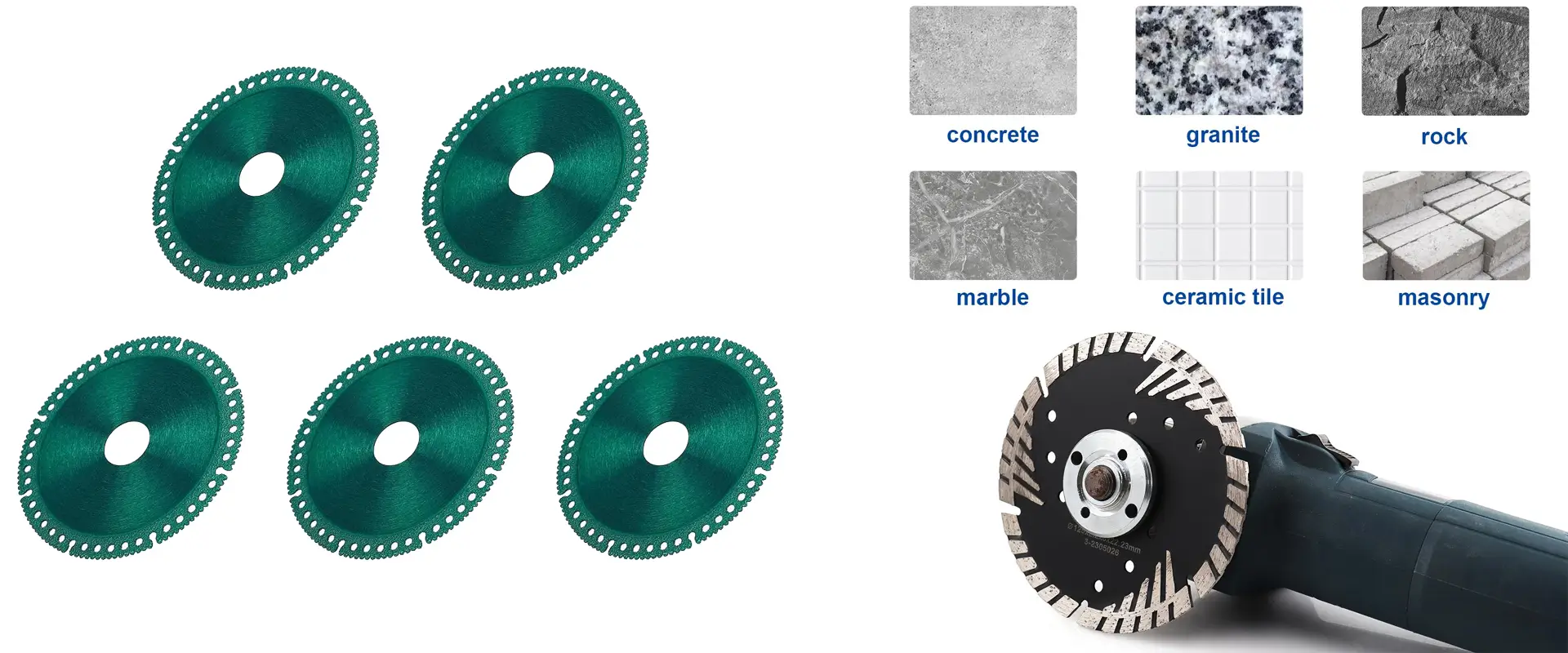

Tired of shattered abrasive discs and lost money?
If you regularly work with metal, you know the exact frustration of a standard abrasive cut-off wheel. You make two cuts into heavy steel, and the disc has already shrunk to half its size. You will risk the wheel binding, shattering, and sending fiberglass shrapnel into your face. You need a solution that cuts aggressively, stays cool, and holds its body shape. You might be looking at that expensive masonry blade in your toolbox and wondering if it can do the job.
Here is the definitive, professional guide on how to safely and effectively cut metal with diamond blades, and how to maximize your tool’s lifespan without burning up your budget.
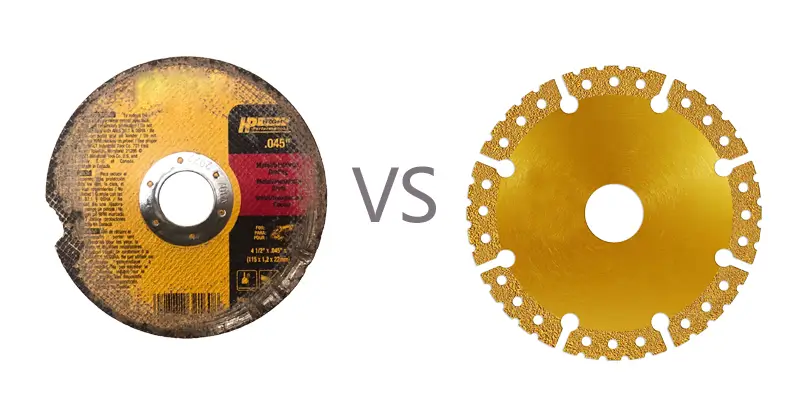
Can you Use a Diamond Blade to Cut through Metal?
The short answer is yes, absolutely—but you cannot use just any standard diamond blade. Understanding the metallurgy behind the blade is the difference between a clean cut and a destroy tool.
Standard diamond blades are engineered specifically for masonry: concrete, asphalt, block, and stone. They are manufactured using a "sintered" process. This means the diamond grit is baked into a soft metal matrix along the rim. As you cut highly abrasive concrete, that soft metal matrix slowly wears away, constantly exposing a fresh layer of sharp diamonds beneath it.
If you use a standard sintered concrete blade and plunge it into solid structural steel, the mechanics fail. Steel is not abrasive enough to wear away the matrix, but it is soft enough to melt and coat the outer layer of diamonds. Your blade will glaze over, overheat, warp, and stop cutting entirely.
Quick Comparison: Abrasive vs. Sintered vs. Brazed
| Feature | Aluminum Oxide Abrasive Disc | Standard Sintered Diamond Blade | Vacuum Brazed Metal Diamond Blade |
|---|---|---|---|
| Best Used For | Light, quick metal cuts | Concrete, brick, stone | Steel, rebar, cast iron, aluminum |
| Tool Wear | Shrinks rapidly per cut | Shrinks slowly over time | Never shrinks1, solid steel core |
| Safety Risk | High (Prone to shattering) | Medium (Can warp if misused) | Low (Shatter-resistant steel) |
| Sparks/Debris | High sparks, heavy toxic dust | Low sparks, heavy silica dust | Moderate sparks, metallic dust only |
Diamond Blade: Continuous Rim or Segment Rim?
Choosing the right rim geometry is essential for many reasons including how quickly, smoothly and heat distributed from the blade to the object being cut. If the wrong profile rim is used when cutting heavy metals, there will be an extreme amount of heat build-up.
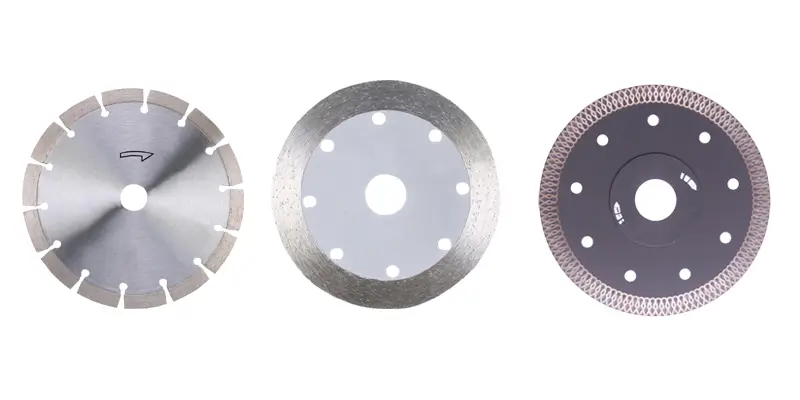
Continuous Rim Blades
- The Design: A perfectly smooth, uninterrupted cutting edge.
- The Application: Designed for brittle, delicate materials like porcelain, ceramic tile, and glass.2
- How it Operates: The continuous edge ensures the blade grinds smoothly without catching or chipping the fragile material. However, because there are no breaks in the rim, it generates massive amounts of friction. You must run continuous rim blades with a constant stream of water.
- Verdict for Metal: Absolutely Not. Do not use continuous rim blades on metal. The heat generated will instantly ruin the blade and likely damage your grinder.
Segmented Rim Blades
- The Design: The cutting edge is divided into distinct sections (segments) separated by deep slots called "gullets."
- The Application: Rough concrete, masonry block, asphalt, and heavy-duty metal cutting.
- How it Operates: This is the workhorse profile. The gullets serve two critical functions:
- Aerodynamics: They act like fan blades, pulling cool air into the cut to prevent the steel core from warping.
- Swarf Removal: They violently eject the metal shavings (swarf) out of the cutting channel, preventing the blade from binding.
- Verdict for Metal: Highly Recommended. Almost all specialized metal-cutting diamond blades utilize a segmented design to survive the intense thermal load of cutting steel dry.
Turbo Rim Blades (The Hybrid)
- The Design: A continuous edge that features a serrated, corrugated, or grooved texture.
- The Application: Granite, natural stone, and general masonry where you need a balance of speed and a smooth edge.
- How it Operates: The serrations act like mini-gullets, pushing debris out and pulling some air in, allowing for dry cuts faster than a continuous rim but cleaner than a segmented rim.
- Verdict for Metal: Situational. Some fire-rescue blades use a vacuum-brazed turbo rim to cut through car doors and mixed materials (glass, plastic, and metal). However, for thick, heavy structural steel, segmented remains superior.
How to Tell if a Diamond Saw Blade is Dull?
Here is a major misconception: diamond blades do not get "dull" , a steel handsaw or a kitchen knife does. The synthetic diamonds bonded to the edge do not lose their sharpness.
Instead, a diamond blade stops working because it becomes glazed.
Glazing occurs when the heat and pressure of the cut cause the metal matrix (or the material you are cutting) to melt and smear over the diamond grit. The diamonds are still there; they are just buried under a smooth layer of metal.
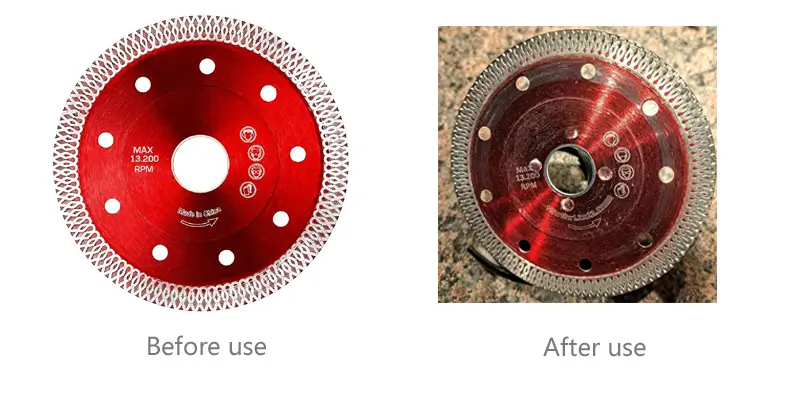
5 Undeniable Signs Your Blade is Glazed:
- The "Push" Factor: A healthy blade pulls itself through the material. If you find yourself physically leaning your body weight onto the grinder just to make a shallow groove, your blade is glazed.
- Sudden Drop in RPM: You can hear the motor of your saw or grinder bogging down and screaming, because of the blade is acting as a friction brake rather than a cutting tool3.
- The Smooth Touch Test: Unplug your tool. Run your thumb across the cutting rim. It should feel aggressively rough, like 40-grit sandpaper. If it feels as smooth as a coin, the diamonds are covered.
- Discoloration: Look at the steel core just below the rim. If it is turning blue, purple, or black, you are generating severe friction heat.
- Sparks Turn to Smoke: Metal-cutting blades will throw sparks, but if the cut suddenly starts billowing smoke without penetrating the steel, the blade is failing.
How Long Do Diamond Cutting Blades Last?
Cost efficiency is the primary reason professionals switch to diamond blades for metalwork. While a stack of abrasive wheels might seem cheap at the hardware store, the downtime spent constantly swapping shattered discs eats into your margins.
A premium vacuum brazed metal-cutting diamond blade will typically yield the same number of cuts as 50 to 100 high-quality abrasive discs.
However, that lifespan is not guaranteed. It depends entirely on the operator. Here are the four variables that dictate how long your investment will survive:
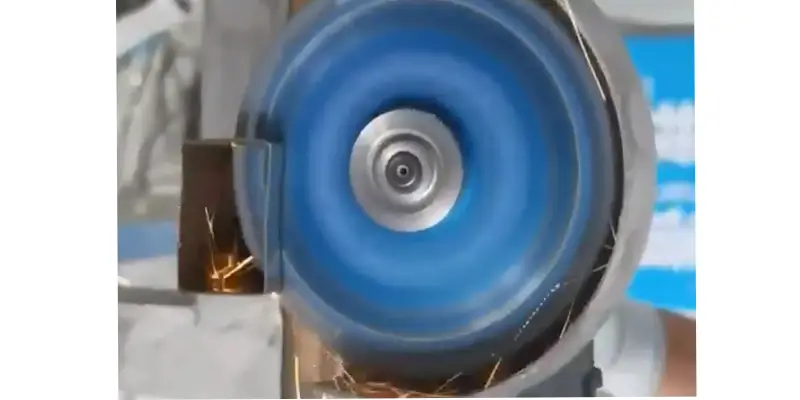
1. Material Density and Thickness
Slicing through corrugated roofing tin, thin-wall aluminum tubing, or steel studs puts almost no stress on a brazed blades. In these applications, the blade can easily last for thousands of cuts4. Conversely, plunging the blade into 1-inch thick solid cast iron or hardened high-carbon steel generates immense thermal load, stripping the diamonds faster and reducing the overall lifespan.
2. RPM Matching
Every diamond blade is stamped with a Maximum RPM rating. Never exceed it.
- Running a 14-inch chop saw blade on a high-speed gas-powered cutoff saw will rip the brazed diamonds directly off the steel core.
- Running a blade too slowly prevents the centrifugal force from clearing the swarf, leading to immediate glazing. Match the blade to the specific tool it was designed.
3. Operator Technique
Heat is the enemy of diamonds. If you plunge the blade deep into a thick piece of steel and hold it there steadily, the core will overheat and warp.
- Use the Oscillating Technique: Rock the blade back and forth along the cut line (often called "woodpecking"). This minimizes the surface area in contact with the blade at any given second, reducing friction and allowing the gullets to pull cool air into the steel core.
- Let the Tool Work: Never force or pry the blade. Right application, steady pressure and let the high-speed RPMs do the grinding.
4. Cooling Mediums (Wet vs. Dry)
Most 4.5-inch and 5-inch diamond blades for angle grinders is strictly designed for dry cutting. However, if you using a large 14-inch diamond blade on a stationary chop saw, introducing a water stream or synthetic cutting fluid will drop the operating temperature significantly. Keeping the brazed diamonds cool can double or even triple their effective lifespan.
Conclusion
Cutting metal with a diamond blade is not a makeshift hack; it is the professional standard for safety, efficiency, and long-term cost savings. By leaving your standard masonry blades alone and upgrading to a specialized vacuum brazed diamond blade, you eliminate the constant tool changes and safety hazards associated with abrasive wheels. Remember to utilize segmented rims for optimal cooling, recognize the signs of a glazed blade so you can dress it properly, and let the tool’s RPMs do the heavy lifting. Master these rules, and you will not worried about broken abrasive wheel.
FAQ
Q: Can a standard concrete diamond blade cut through rebar? A: Yes, but context matters. If the rebar is embedded inside a concrete slab, the blade will cut it easily. The abrasive concrete continuously dresses the blade as it cuts the steel, keeping the diamonds exposed. However, if you try to cut loose rebar sitting on a workbench with that same concrete blade, it will glaze over and stop cutting.
Q: Are metal-cutting diamond blades safer than abrasive wheels? A: Considerably safer. Abrasive wheels are made of bonded grit and fiberglass mesh. If you twist the grinder during a deep cut, an abrasive wheel will snap and shatter violently, which is a major cause of shop injuries. A diamond blade features a solid, high-tensile steel core. If it binds, the grinder will kick back, but the blade itself will not shatter into pieces.
Q: Why does my diamond blade leave a rough, burred edge on steel? A: Diamond blades do not have sharp, shearing teeth like a cold saw or a bandsaw. They operate via high-speed grinding. Plowing through metal with diamond grit inherently melts and pushes the material, leaving a slight burr on the bottom edge of the cut. You will usually need to make a quick pass with a flap disc or deburring tool to achieve a perfectly smooth edge.
Q: Can I use a metal diamond blade to cut wood or plastic? A: Absolutely not. Diamond blades are friction-grinding tools, not shearing tools. Wood fibers and soft plastics will instantly melt or clog the diamond grit. Trying to cut wood with a diamond blade will cause extreme smoking, burn the material, and create a severe, highly dangerous kickback hazard. Always use a dedicated, carbide-toothed blade for wood.
Q: Can a diamond blade cut stainless steel? A: Yes, a vacuum brazed diamond blade will cut stainless steel. However, stainless steel contains nickel and chromium, making it incredibly tough and prone to work-hardening. Cutting stainless will generate extreme heat and wear down the diamond layer much faster than standard mild steel. Use light pressure and an oscillating motion to prevent overheating.
"A technical source on diamond saw-blade construction can support that diamond blades use a steel core with diamond abrasive at the rim, so they do not reduce in diameter in the same way bonded abrasive cut-off wheels do; this contextual support does not prove that all vacuum-brazed blades literally experience no dimensional wear under every use condition. Evidence role: mechanism; source type: education. Supports: Vacuum brazed metal diamond blades do not shrink like aluminum oxide abrasive discs because they have a solid steel core.. Scope note: Supports the construction-based distinction, but the absolute wording “Never shrinks” may be stronger than most sources will state because rim and grit wear can still occur. ↩
"Authoritative materials on diamond saw blades describe continuous-rim diamond blades as intended for smooth cutting of hard, brittle materials such as ceramic tile, porcelain, and glass. Evidence role: general_support; source type: institution. Supports: Continuous rim blades are designed for brittle, delicate materials like porcelain, ceramic tile, and glass.. Scope note: Such sources support the typical application of continuous-rim blades, but exact suitability still depends on blade specification, machine speed, and material thickness. ↩
"Technical literature on grinding and cutting describes how dull or glazed abrasive tools reduce chip formation and increase rubbing and frictional energy, which can raise power demand and heat generation; this supports the explanation that a glazed blade can load the motor like a friction brake. Evidence role: mechanism; source type: paper. Supports: A glazed or dull blade can cause motor bogging because it rubs and generates friction instead of cutting efficiently.. Scope note: Sources on grinding mechanics may address abrasive wheels or diamond tools generally, so the support may be mechanistic rather than a direct test of every saw or grinder blade model. ↩
"A controlled wear study or technical report on brazed diamond blades cutting thin sheet metal or tubing can substantiate that low-load, shallow cuts are associated with long service life, sometimes measured across very large cut counts. Evidence role: statistic; source type: paper. Supports: A brazed blade can last for thousands of cuts when used on thin corrugated roofing tin, thin-wall aluminum tubing, or steel studs.. Scope note: Exact cut counts depend on blade design, material thickness, feed rate, cooling, and failure criterion, so the source would contextualize rather than universally prove the stated lifetime. ↩