





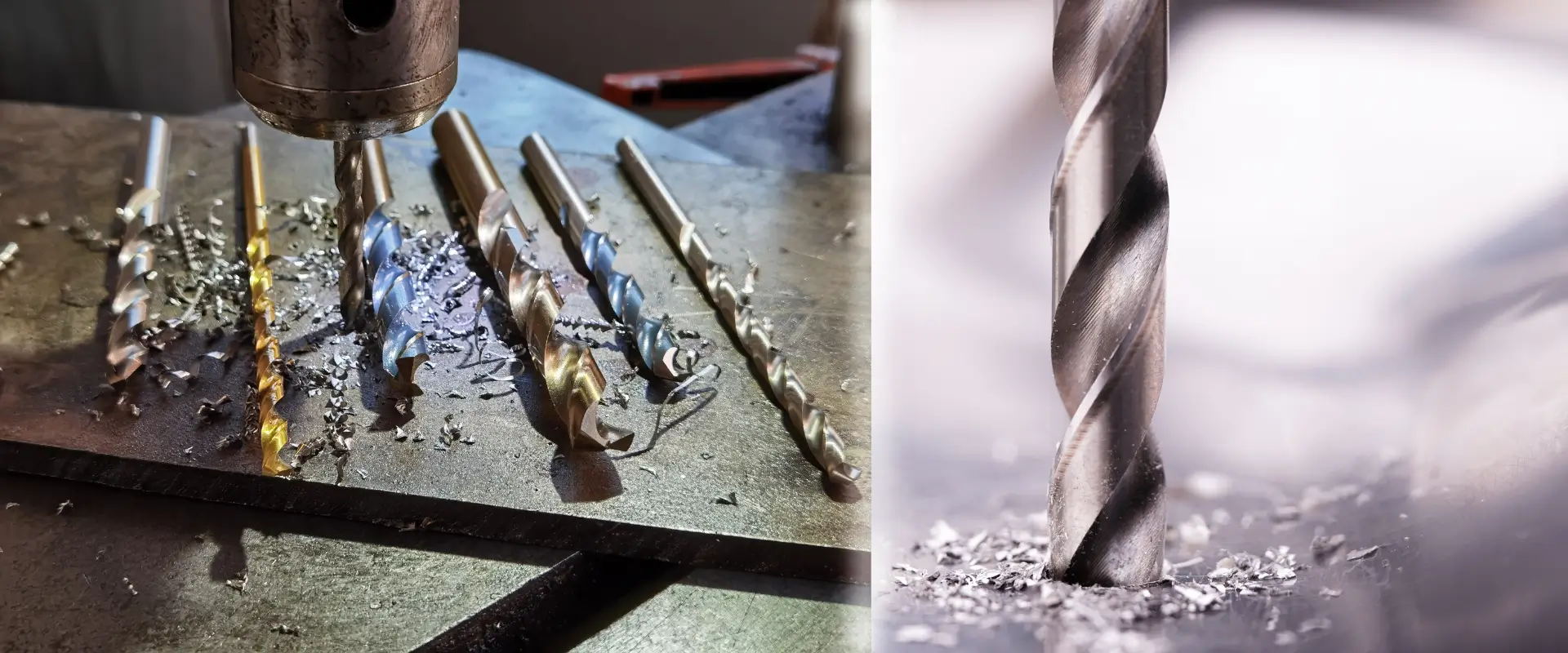

Stop losing B2B clients because of the poor HSS drill bits.
As a purchasing manager or hardware importer, your reputation relies on the consistency of the tools you supply. Sourcing high-speed steel (HSS) drill bits is not just about finding the lowest price; it is about balancing material costs, manufacturing precision, and shelf appeal to protect your profit and eliminate customer returns.
This comprehensive guide shows everything you need to know to source the right HSS drill bits for your specific market, evaluate manufacturer capabilities, and build a profitable, stable supply chain.
We are a leading manufacturer of HSS drill bits, offering wholesale and OEM solutions. We produce multiple grades (4241, M2, M35 Cobalt) using fully ground processes, ensuring the right bit for every job, from DIY woodworking to professional stainless steel drilling.
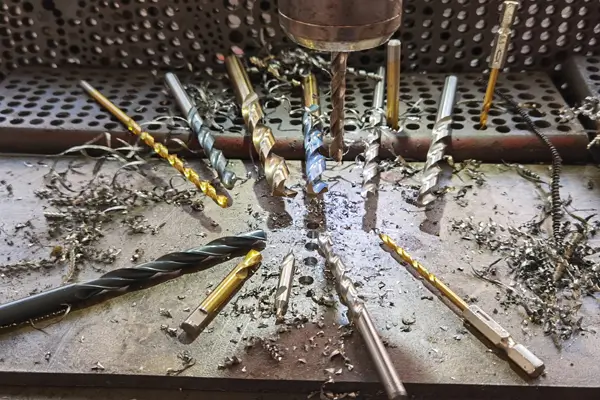
I understand how inconsistent quality and tool failure hurt your business and damage your customer relationships. That's why we focus on material selection, advanced heat treatment, and strict quality control. We want you to have a partner that delivers reliable, high-performance tools that protect your brand. Let me explain how our capabilities and commitment support your success.
Understanding HSS Material Grades: Match the Right Bit to Your Market
Not all high-speed steel is created equal. The raw material dictates the hardness, heat resistance, and ultimately, the price of the drill bit. Offering the wrong grade to a professional contractor will destroy your brand trust. Here is how to manage your sourcing strategy.
You must match the HSS grade to your target market: 4241 for DIY, M2 for professionals, and M35 Cobalt for stainless steel. Choosing the wrong material leads to immediate tool failure and customer complaints.
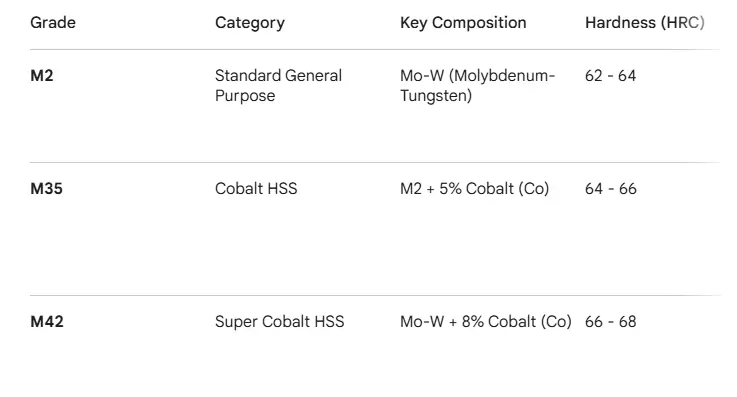
Stocking the right material grade protects your business from costly returns. We provide clear options so you can match the tool to the user, ensuring satisfaction and protecting your profits.
HSS 4241 vs. 4341: Cost-Effective Choices for General Use
If you are supplying the DIY market, hardware supermarkets, or general household repair kits, HSS 42411 and 4341 are your best choice.
- HSS 4241: The most economical choice. Suitable for drilling wood, plastic, and soft metals like aluminum. It loses hardness at high temperatures, making it unfit for continuous industrial use.
- HSS 4341: A step up from 4241. It offers slightly better wear resistance and can handle mild steel.
- Wholesale Strategy: Buy these in high volumes with bulk or blister card packaging for fast-moving consumer goods retail channels.
HSS M2 (6542): The Industry Standard for Professional Sourcing
For B2B wholesalers targeting construction workers, mechanics, and serious trades people, HSS M2 (also known as 6542 in China) is the mandatory baseline.
- Performance: Contains higher tungsten and molybdenum. It withstands higher temperatures and maintains a sharp cutting edge longer.
- Application: Easily drills through carbon steel, cast iron, and thick sheet metal.
- Wholesale Strategy: This should be your core product line. It offers the best balance of cost and performance, resulting in high reorder rates from professional clients.
Quick Reference: HSS Material Comparison Table
| Material Grade | Chinese Equivalent | Hardness (HRC) | Primary Applications | Target Market | Price Level |
|---|---|---|---|---|---|
| HSS 4241 | W4Mo2Cr4V | 60-61 | Wood, Plastic, Aluminum | DIY, Home Use | Low |
| HSS 4341 | W4Mo3Cr4V | 61-62 | Mild Steel, Iron | Light Trade | Low-Mid |
| HSS M2 | 6542 | 62-64 | Carbon Steel, Hard Wood | Professional, Contractors | Medium |
| HSS M35 | W6Mo5Cr4V2Co5 | 64-66 | Stainless Steel, Hard Alloys | Industrial, Heavy Duty | High |
Manufacturing Processes That Decide Drill Bit Quality
You cannot judge a drill bit merely by its material. The manufacturing process dictates whether the bit will drill a perfectly round hole or snap under pressure. When speaking to suppliers, you must ask about their production methods.
The two key processes are Roll Forged (cheap, for DIY) and Fully Ground (precise, for professionals). Heat treatment is also critical for maximizing tool lifespan and preventing breakage.
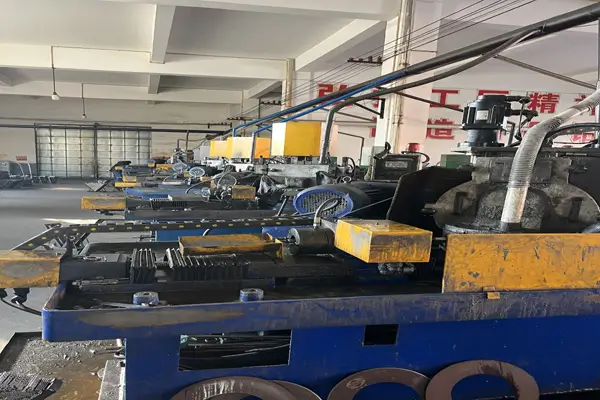
Understanding the manufacturing process protects your business from stocking underperforming products. We provide clear guidance so you can source the right quality level for your market, ensuring performance and build your reputation.
Roll Forged vs. Fully Ground HSS Drill Bits
The way the flutes (the spiral grooves) are formed is the biggest difference in drill bit quality.
- Roll Forged (Hot Rolled)2: The steel is heated and pressed through rollers to form the shape.
- Pros: Very cheap to produce.
- Cons: Lower precision, duller edges, higher friction.
- Verdict: Only suitable for the cheapest DIY retail kits.
- Fully Ground (Milled): The bit is machined from a solid blank of hardened steel using CNC grinders.
- Pros: Razor-sharp cutting edges, perfect concentricity (no wobbling), clears chips rapidly.
- Cons: Higher production cost.
- Verdict: Mandatory for M2 and M35 professional grades.
The Crucial Role of Heat Treatment in Maximizing Lifespan
A drill bit is useless if it is too soft (it will bend) or too hard (it will shatter). Advanced heat treatment (quenching and tempering) is the secret to a long-lasting tool.
- Ask your factory for their HRC testing reports.
- A professional manufacturer utilizes automated salt bath furnaces or vacuum furnaces to ensure uniform hardness across the whole batch. Inconsistent heat treatment is the leading cause of drill bit failure and client complaints.
FAQ: Frequently Asked Questions for B2B Buyers
1. What is the minimum order quantity (MOQ) for OEM-branded HSS drill bits?
For customized laser engraving and OEM packaging, the MOQ typically ranges from 500 to 1,000 pieces per size, depending on the specific dimensions and packaging type (e.g., blister card vs. metal box sets). For bulk unbranded orders, the MOQ can often be negotiated lower.
2. How do I know if a factory is using real Cobalt (M35) instead of just painting standard HSS?
Authentic M35 Cobalt drill bits have a distinct weight and hardness. The most reliable way to verify is to ask the factory for a material composition certificate from a third-party testing agency (like SGS). You can also perform a destructive test: genuine M35 maintains its cutting edge even when drilling hard stainless steel at high friction, whereas fake cobalt bits will immediately dull and burn.
3. Can you manufacture custom drill bit sizes not listed in the standard catalog?
Yes. As a direct manufacturer, we have full in-house CNC machining capabilities. If you provide the technical drawings or specific dimensional requirements (including custom lengths, specific point angles, or unique shank designs), we can produce a sample before mass production.
4. What is the standard lead time for a 20ft container of drill bits?
Once the OEM packaging design is confirmed and the deposit is received, standard production time for a full container load is typically 35 to 45 days. This ensures adequate time for meticulous heat treatment, CNC grinding, and rigorous pre-shipment quality control.
5. What are the main packaging options for wholesale?
We offer flexible packaging: bulk boxes for industrial clients, PVC tubes for single-piece retail, blister cards for supermarkets, and high-margin metal/plastic index sets (e.g., 19-piece or 25-piece sets) to increase your average order value.
Conclusion
Sourcing the right HSS drill bits build your success in the hardware wholesale market. By understanding the critical differences between materials like 4241 and M2, insisting on fully ground manufacturing processes, and demanding quality control, helping protect your margins and build long-term trust with your buyers. Stop settling for inconsistent quality from trading companies. Partner with a dedicated manufacturer that understands B2B requirements, OEM packaging, and strict delivery schedules. Partner with a manufacturer that delivers on its promises.