




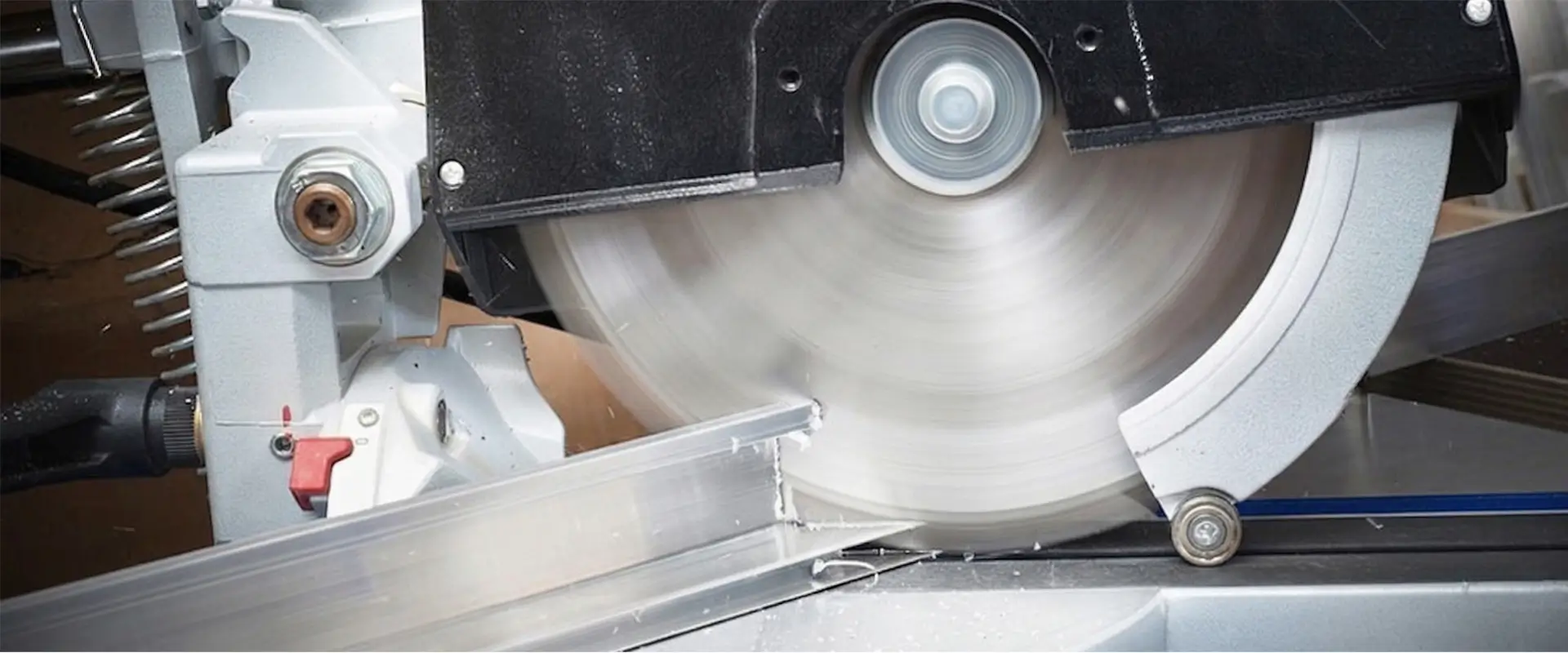

Struggling with burred cuts, short blade life, or unreliable suppliers?
As a purchasing manager, you need industrial aluminum cutting blades that deliver precision and durability. Standard wood-cutting blades simply will not work for non-ferrous metals. You need specialized tooling. This guide breaks down the technical specifications, manufacturing standards, and sourcing strategies you need to secure high-quality, industrial aluminum cutting blades directly from a reliable factory.
We are a leading manufacturer of industrial aluminum cutting blades, offering wholesale and OEM solutions. We produce TCG (Triple Chip Grind) blades with premium tungsten carbide teeth, ensuring burr-free cuts on aluminum extrusions, copper, and hard plastics for professional working.
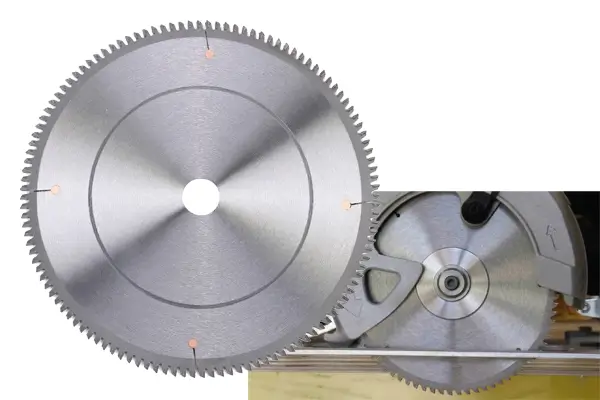
I understand how blade failure and bad finishes hurt your business and damage your customer relationships. That's why we focus on precise TCG geometry, premium carbide, and strict professional welding standards. We want you to have a partner that delivers reliable, high-performance cutting tools that protect your brand. Let me explain how our capabilities and commitment support your success.
The Core of Industrial Aluminum Cutting Blades
To guarantee smooth cuts and long lifespans, an aluminum cutting blade must be engineered with specific geometries and premium materials.
You must use blades with TCG (Triple Chip Grind) tooth geometry, premium Tungsten Carbide Teeth (TCT), and high-frequency welding. This combination prevents grabbing, reduces kickback, and ensures a burr-free finish on aluminum and other non-ferrous metals.
Using the right blade core protects your business from costly returns and safety complaints. We provide clear specifications so you can stock the right tool for the job, ensuring contractor satisfaction and protecting your profits.
Why TCG (Triple Chip Grind) is the Gold Standard for Aluminum
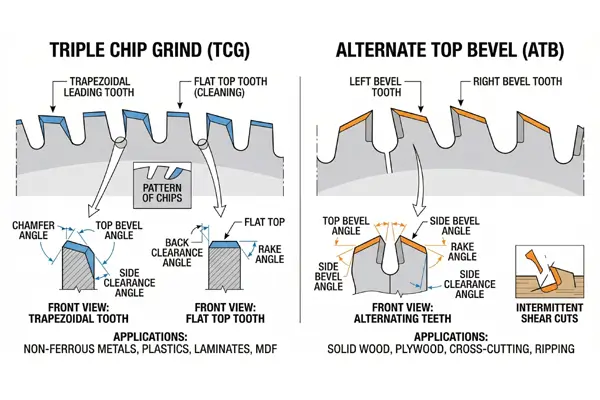
If you are cutting aluminum, you must use a Triple Chip Grind (TCG)1 tooth configuration. Unlike the Alternate Top Bevel (ATB) used for wood, TCG is explicitly designed for hard, abrasive materials like metals. The TCG geometry alternates between two types of teeth:
- A flat "raking" tooth: Cleans out the chips from the cut.
- A trapezoidal "chamfered" tooth: Makes the initial cut into the material, slightly narrower than the flat tooth. Why this matters for you: This dual-tooth design prevents the blade from "grabbing" the aluminum, reducing kickback. It also prevents the soft metal from melting and sticking to the carbide tips, ensuring a burr-free finish.
Tungsten Carbide Teeth (TCT) and High-Frequency Welding
The raw material of the cutting tip due to the lifespan of the blade. Industrial blades use premium Tungsten Carbide Teeth (TCT). The carbide grade must balance hardness (to retain a sharp edge) and toughness (to resist shattering upon impact). Equally important is how the carbide is attached to the steel body.
- High-Frequency Welding: Industrial manufacturers utilize fully automated high-frequency silver brazing. This ensures the carbide tip is permanently bonded to the steel plate.
- The Benefit: It ensures that teeth will not fly off during high-RPM operations, ensuring maximum safety and durability for your customers.
Industrial Grade vs. DIY Grade: What Importers Need to Know
Do not damage your brand reputation on cheap, DIY-grade blades. Here is a quick comparison to help you verify supplier quality:
| Feature | Industrial Grade (What You Need) | DIY/Retail Grade (What to Avoid) |
|---|---|---|
| Steel Body | Fully hardened, tensioned tool steel (e.g., 65Mn or 75Cr1). | Stamped, untreated soft steel. |
| Carbide Quality | Micro-grain tungsten carbide (stays sharp longer). | Standard or recycled carbide. |
| Run-out Tolerance | Extremely low, ensuring zero wobbling. | High variance, causing rough cuts. |
| Noise Reduction | Laser-cut anti-vibration slots filled with resin. | Solid plate, extremely loud and vibrating. |
| Welding | Automated high-frequency silver brazing. | Manual or low-temperature brazing. |
Essential Specs for Purchasing Managers
When you send an inquiry to a manufacturer, providing precise specifications speeds up the quotation process and ensures you get exactly what your market demands.
Key specifications include teeth count (for finish quality), kerf width (for material yield), and arbor size (for machine compatibility). Getting these right ensures the blade performs as expected in your customer's workshop.
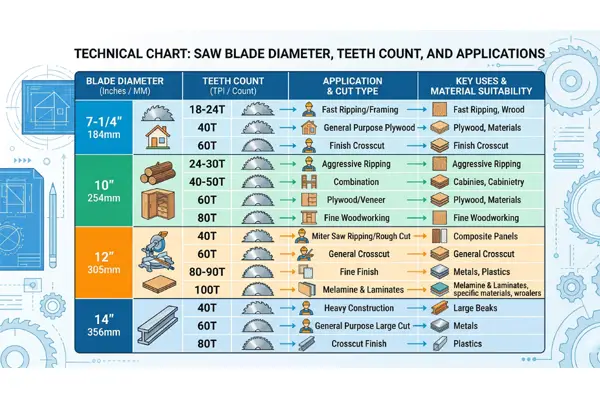
Understanding these specs protects your business from stocking incompatible or underperforming products. We provide clear guidance so you can match the blade to the machine and material, ensuring performance and protecting your reputation.
Optimizing Teeth Count for Smooth, Burr-Free Finishes
The number of teeth determines the speed and finish of the cut.
- Fewer Teeth2: Faster cutting, but a rougher finish. Suitable for thick, solid aluminum bars.
- More Teeth: Slower cutting, but a highly polished, burr-free finish. Essential for thin-walled aluminum extrusions.
Standard Specification Reference Table:
| Blade Diameter | Recommended Teeth (T) | Common Arbor Size | Best For |
|---|---|---|---|
| 10" (250mm) | 80T, 100T, 120T | 5/8", 30mm | Thin-wall profiles, window frames |
| 12" (300mm) | 80T, 100T, 120T | 1", 30mm | Medium extrusions, tubes |
| 14" (350mm) | 100T, 120T | 1", 30mm | Heavy extrusions, solid bars |
| 20" (500mm) | 120T, 140T | 30mm, 32mm | Heavy industrial block cutting |
Kerf Width: Balancing Material Yield and Cutting Stability
The "kerf" is the width of the slot the blade cuts in the material.
- Thin Kerf (e.g., 2.2mm - 2.5mm): Removes less material, wastes less aluminum, and requires less horsepower from the saw. Ideal for high-volume extrusion cutting where material yield matters.
- Full/Thick Kerf (e.g., 3.2mm+): Provides maximum stability. The blade plate is thicker, preventing deflection or wobbling when cutting thick, solid aluminum blocks.
FAQ: Frequently Asked Questions for B2B Buyers
1. What is the Minimum Order Quantity (MOQ) for custom branded blades?
We support your business growth with a low MOQ of only 100 pieces. This allows you to print your own logo and test the market with minimal risk.
2. Can I get a sample before placing a bulk order?
Yes. We provide free samples so you can test the cutting performance, balance, and durability of our aluminum cutting blades at your own facility.
3. How are the blades packaged for international shipping?
We offer multiple OEM packaging options, including single color boxes, double blister packs, or heavy-duty industrial wooden cases. All blades are treated with anti-rust oil and packed airtight to ensure they arrive in perfect condition via sea or air freight.
4. What is your standard production lead time?
Once the order and specifications are confirmed, our standard manufacturing lead time is exceptionally fast, typically within 2 to 3 weeks.
5. Can these blades be used to cut steel?
Aluminum cutting blades are specifically designed for non-ferrous metals (aluminum, copper, brass) and plastics. Cutting hardened steel or iron will instantly destroy the TCG carbide tips. For steel, you need a dedicated metal-cutting blade with different tooth geometry and cermet teeth.
Conclusion
Sourcing industrial aluminum cutting blades requires a focus on precise engineering: TCG tooth geometry, premium tungsten carbide, and strict manufacturing process. By partnering with a proven, factory-direct manufacturer offering OEM customization, low MOQs, and reliable quality control, you can supply your market with professional-grade cutting tools while maximizing your profit. Do not settle for trading company markups or inconsistent quality; go straight to the source. Partner with a manufacturer that delivers on its promises.