





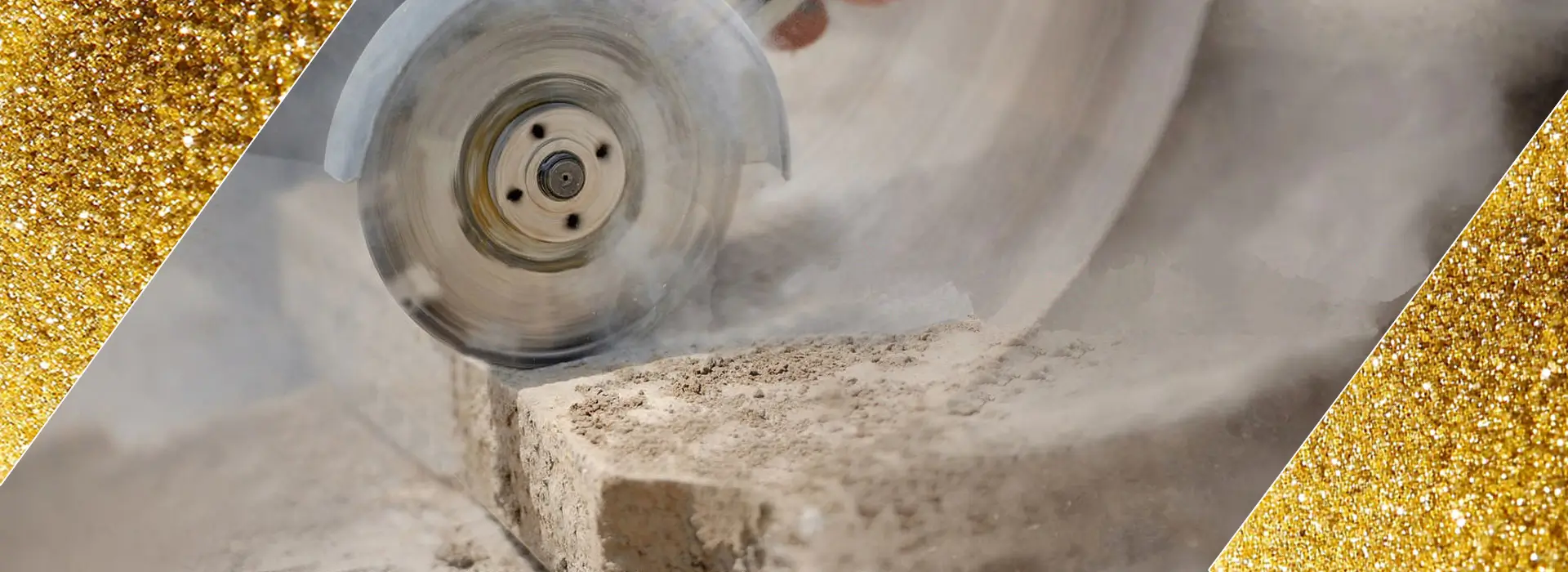

Are you burning through blades, struggling with silica dust, or losing time on site?
Choosing between wet and dry diamond blades directly influence your project cost, blade lifespan, cutting speed, and safety.
This guide explains when to use wet cutting and when to use dry cutting, how blade manufacturing affects performance, and how contractors can get better value from diamond tools.
What is the Difference Between Wet and Dry Diamond Blades?
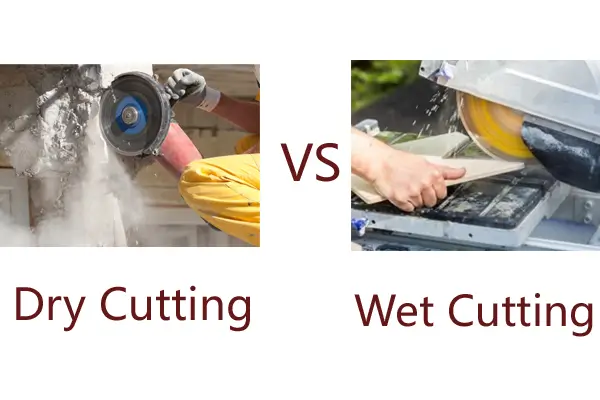
To understand the difference between wet and dry diamond blades, you need to understand how the blade works. A diamond blade does not actually “cut” like a knife. It grinds. Synthetic diamond crystals are embedded in a metal bond, and these diamonds scratch away concrete, stone, asphalt, tile, or masonry.
This grinding action creates extreme friction and heat. The biggest difference between wet and dry diamond blades is how they control heat and how the diamond segments are attached to the steel core.
How Wet Cutting Works
Wet cutting uses a continuous stream of water to cool the blade, reduce friction, and control dust.
Manufacturing
Because water keeps the blade temperature low, many wet diamond blades use silver brazing or sintering to attach the diamond segments to the steel core. These methods work well when the blade is always used with water.
Cutting Process
During wet cutting, water cools the blade and washes away cutting debris1. Fine dust particles are turned into slurry, which helps keep the cutting path clean and allows fresh diamonds to stay exposed during operation.
Main Benefits of Wet Cutting
- Lower blade temperature during heavy cutting
- Longer blade life
- Better dust suppression
- Cleaner cut edges
- Better performance on deep cuts and hard materials
How Dry Cutting Works
Dry cutting depends on airflow rather than water to cool the blade.
Manufacturing
Dry diamond blades must withstand high heat without segment loss, core warping. For this reason, dry cutting blades are usually laser welded2. The diamond segments are welded directly to the steel core, creating a strong bond suitable for high-temperature cutting.
At Tenyu Tool, automated laser welding production helps improve segment bonding more strengthen and blade consistency for professional dry cutting applications.
Cutting Process
Dry blades often have deeper U-gullets, keyhole gullets, or teardrop slots between the segments. These spaces help air move through the blade during rotation, reducing heat buildup and helping remove dust from the cut.
Main Benefits of Dry Cutting
- No water supply needed
- Fast setup and teardown
- Suitable for outdoor repair work
- Convenient for shallow cuts
- Easy to use with angle grinders and cut-off saws
Pros and Cons of Wet Cutting with Diamond Blades
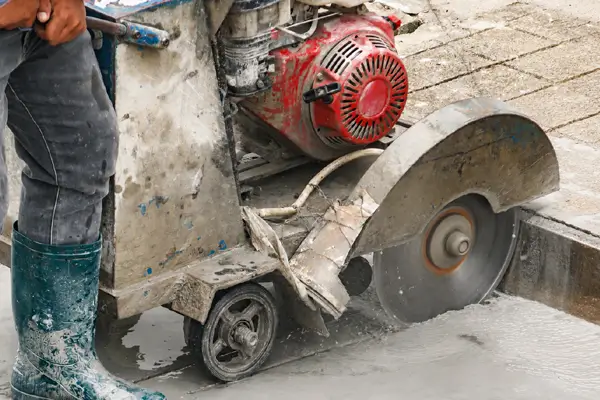
Wet cutting is the preferred method for heavy-duty, deep, and continuous cutting work. It is widely used for concrete, reinforced concrete, stone, asphalt, tile, and other demanding materials.
Pros of Wet Cutting
Maximum Tool Lifespan
Water reduces heat and friction3, which are the main causes of blade wear. This helps extend blade life and reduce cutting cost per meter.
Faster Cutting Speed
A cooler blade keeps better cutting stability and diamond exposure, allowing operators to cut faster through dense materials.
Better Dust Control
Water suppresses airborne dust at the source. This is especially important when cutting concrete, brick, stone, or other silica-containing materials.
Cleaner Cut Finish
Water flushes debris away from the cutting area and reduces chipping. This is especially useful for tile, porcelain, granite, marble, and natural stone.
Better for Deep Cutting
For thick concrete slabs, trenching work, and reinforced concrete cutting, wet cutting helps prevent overheating and core deformation.
Cons of Wet Cutting
Water Supply Required
Wet cutting requires a hose, water tank, or wet saw system. This can make setup more complicated.
Slurry Cleanup
Water mixes with dust and debris to form slurry. This slurry must be cleaned and disposed of properly to avoid staining surfaces, blocking drains, or creating safety issues.
Limited Use in Some Environments
Wet cutting may not be suitable near exposed electrical systems or in finished indoor areas where water damage is a concern.
Pros and Cons of Dry Cutting
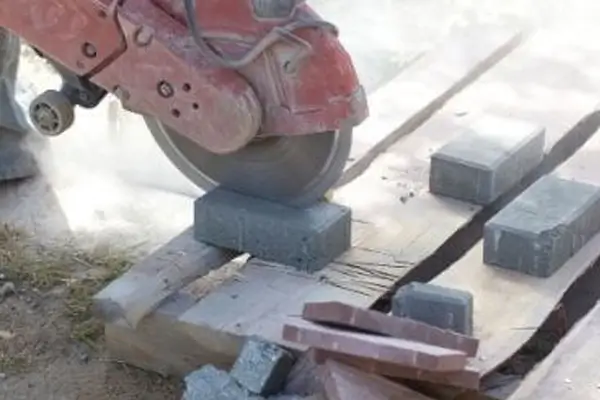
Dry cutting is ideal for portability, fast jobsite work, and shallow cuts. It is commonly used for masonry blocks, bricks, concrete scoring, outdoor repair work, and quick adjustments.
Pros of Dry Cutting
Excellent Portability
No hose, water tank, or pump is required. Operators can work quickly with an angle grinder, cut-off saw, or handheld power saw.
Fast Setup
Dry cutting saves time because there is no water connection and no slurry cleanup.
Dry Work Area
The jobsite stays dry, which is helpful when working near finished surfaces, subfloors4, or places where water is not allowed.
Suitable for Intermittent Cuts
Dry cutting is practical for shallow cuts, small repair work, masonry shaping, and quick outdoor cutting jobs.
Cons of Dry Cutting
Intermittent Cutting Required
A dry blade should not be forced deeply into the material for long periods. Operators should use shallow passes and allow the blade to free-spin in the air for cooling.
Heavy Dust Generation
Dry cutting produces large amounts of dust. When cutting concrete, brick, or stone, this dust may contain respirable crystalline silica.
Shorter Blade Life
Even with laser welding, dry cutting creates more heat than wet cutting. This usually leads to faster wear.
Rougher Cut Finish
Without water lubrication, dry cutting may create more edge chipping, especially on brittle materials.
Material Guide: Wet or Dry for Concrete, Asphalt, and Tile?
Contractors do not just buy a blade. They buy a solution for a specific material. Choosing the right cutting method and blade type is essential for safety, cutting speed, and blade life.
| Material | Recommended Method | Why? | Best Blade Type |
|---|---|---|---|
| Cured Concrete | Wet for deep cuts / Dry for shallow cuts | Deep cuts generate too much heat for dry blades. Dry cutting is better for scoring or shallow joints. | Laser-welded segmented blade |
| Reinforced Concrete | Wet | Rebar cutting creates high heat and sparks. Water helps protect the segment and core. | Turbo-segmented wet blade |
| Asphalt / Green Concrete | Wet recommended | Asphalt is abrasive. Water helps flush grit away and reduce undercutting. | Drop-segment asphalt blade |
| Ceramic / Porcelain Tile | Wet recommended | Brittle materials need water lubrication to reduce chipping and edge damage. | Continuous rim wet blade |
| Brick / Masonry Block | Dry | Usually used for quick, shallow cuts where portability matters. | Segmented masonry blade |
How to Maximize the Lifespan of Your Diamond Tools
From a manufacturer’s perspective, many diamond blades fail early because of wrong operation, wrong material matching, or incorrect cutting method. The following rules help contractors get more value from every blade.
1. Never Use a Wet Blade Dry
A wet blade is not designed for dry cutting. Many wet blades use brazed segment attachment, which cannot withstand the high heat of dry cutting. Running a wet blade dry may cause segment loss and serious safety risks.5.
2. You Can Use a Dry Blade Wet
A dry blade is usually built with stronger segment attachment, such as laser welding. Using water with a dry-rated blade is generally safe and can improve cooling, reduce dust, and extend blade life.
Always make sure the power tool is suitable for wet use.
3. Let the Blade Do the Work
Do not force the blade into the material. Excessive pressure does not improve cutting speed. It can glaze the diamonds, overheat the core, and cause blade warping.
4. Follow the Directional Arrow
Always the blade according to the directional arrow printed on the steel core. Incorrect installation may reduce cutting performance and blade life.
5. Use Step Cutting for Dry Applications
When dry cutting thick material, avoid plunging to full depth in one pass. Make a shallow first pass, then cut deeper in stages. This reduces heat buildup and improve blade safety.
6. Match the Bond to the Material
The blade bond must match the material hardness and abrasiveness.
- For hard materials such as cured concrete, granite, and porcelain, use a softer bond. This helps expose fresh diamonds faster.
- For soft and abrasive materials such as asphalt and green concrete, use a harder bond. This helps hold the diamonds longer and prevents fast segment wear.
Partnering with a Reliable Diamond Tool Manufacturer

Your business is only as efficient as the tools you supply or use. For contractors, distributors, and importers, sourcing consistent diamond blades is essential for reducing complaints, improving repeat orders, and protecting brand reputation.
At Tenyu Tool, we provide diamond blade manufacturing solutions for global B2B buyers. Based in Danyang, Jiangsu, China, we support professional buyers with stable production, OEM customization, and application-based blade selection.
Why Work with Tenyu Tool?
Precision Engineering
We use automated laser welding technology for dry cutting blades, helping improve segment strength, batch consistency, and cutting safety.
Application-Based R&D
Different markets need different blade formulas. Whether you need turbo blades for reinforced concrete, drop-segment blades for asphalt, or continuous rim blades for porcelain tile, the diamond matrix and bond can be adjusted according to your application6.
OEM and ODM Support
We support custom logo, private label packaging, custom segment design, size customization, and flexible shipment solutions for importers, wholesalers, and tool brands.
Suitable for Global B2B Buyers
Our diamond blades are suitable for distributors, construction tool wholesalers, hardware importers, and professional cutting tool brands in the US, Europe, Middle East, and other markets.
Contact Tenyu Tool today to request our latest diamond blade catalog or discuss custom manufacturing for your brand.
Conclusion
There is no single winner in the wet cutting vs. dry cuting debate. The right choice depends on the material, cutting depth, jobsite condition, tool type, and safety requirements.
By understanding the differences between wet and dry diamond blades, matching the blade bond to the material, and following correct operating practices, contractors can cut faster, work safer, and lower their overall consumable cost.
Frequently Asked Questions
Can I use a wet diamond blade dry?
No. A wet diamond blade should not be used dry. Many wet blades are made with brazed segment attachment, which cannot withstand the high heat of dry cutting. Running a wet blade dry may cause segment loss and serious operator safety risks.
Can I use a dry diamond blade wet?
Yes. A dry diamond blade can usually be used wet, as long as the power tool is suitable for wet operation. Water helps cool the blade, reduce dust, and extend blade life.
Why is my dry diamond blade burning and turning blue?
A blue blade core usually means severe overheating. This may happen when the cut is too deep, the operator pushes too hard, or the blade is not allowed to cool between cuts. It may also mean the blade bond is too hard for the material.
Which is better for cutting reinforced concrete: wet or dry?
Wet cutting is usually better for reinforced concrete. Cutting rebar creates high heat and spark. Water help cool the blade, protect the steel core, and maintain cutting performance.
What is a drop segment on an asphalt blade?
A drop segment extends lower than the main cutting segment to help protect the steel core from abrasive wear. It is commonly used on asphalt blades to reduce undercutting.
Do I really need a HEPA vacuum for dry cutting concrete?
In regulated markets such as the US and Europe, dry cutting concrete usually requires proper dust control. If water cannot be used, a compliant dust shroud and HEPA vacuum system may be required to reduce silica dust exposure.
"A technical or occupational-safety source on wet cutting can support that applying water during cutting reduces heat at the blade-workpiece interface and helps remove generated debris from the kerf. Evidence role: mechanism; source type: government. Supports: During wet cutting, water cools the blade and washes away cutting debris.. Scope note: Support may be general to wet cutting or masonry/concrete cutting rather than specific to every blade material or cutting setup. ↩
"A technical source on diamond tool manufacturing should support that laser welding is commonly used to attach segments on dry-cutting diamond saw blades because the joint tolerates higher operating temperatures than lower-temperature joining methods. Evidence role: general_support; source type: paper. Supports: Dry cutting blades are usually laser welded.. Scope note: This would support common manufacturing practice, not prove that every dry-cutting blade uses laser welding. ↩
"Tribology and machining studies describe cutting fluids, including water-based fluids, as reducing tool–workpiece friction and carrying heat away from the cutting zone. Evidence role: mechanism; source type: paper. Supports: Water reduces heat and friction during cutting.. Scope note: The support is general to machining and cutting-fluid mechanisms; effectiveness depends on material, blade type, flow rate, and cutting conditions. ↩
"[PDF] Repairing Floors from Water Damage to Prevent Mold Growth", https://ehs.umich.edu/wp-content/uploads/2016/08/CLS-BEI-M-Floors-Community.pdf. Building-science or flooring guidance should support that moisture exposure can damage or compromise finished surfaces and subfloor materials, explaining why dry work conditions are advantageous near them. Evidence role: general_support; source type: education. Supports: Keeping the jobsite dry is helpful when working near finished surfaces or subfloors because moisture can damage or affect those materials.. Scope note: The evidence would be contextual: it supports the risk of moisture near these materials, not the performance of the specific jobsite method. ↩
"An occupational-safety or standards source on diamond blade operation should support that blades marked for wet cutting require water cooling and that improper dry use can lead to blade or segment failure with injury risk. Evidence role: expert_consensus; source type: government. Supports: Using a wet-cutting blade without water can cause blade or segment failure and create serious safety hazards.. Scope note: Safety guidance typically establishes recognized hazards and recommended use conditions rather than quantifying the probability of segment loss in a specific blade. ↩
"Research on metal-bonded diamond tools describes how bond composition, matrix properties, and diamond concentration influence wear, diamond retention, and cutting performance, supporting the claim that blade formulas can be tailored to application conditions. Evidence role: mechanism; source type: paper. Supports: Diamond blade matrix and bond formulations can be adjusted to suit different cutting applications.. Scope note: This supports the engineering mechanism behind customization; it does not independently validate any particular manufacturer’s formulation or performance claims. ↩